TSMC Raises Its 2026 Growth Forecast to 44 Percent and Tells Analysts AI Demand Exceeds Supply
TSMC reported $46.7 billion of third-quarter revenue on Oct. 15, and Chairman C.C. Wei said AI chip demand outruns supply while credit markets priced AI debt at record stress.
By Ryan Elliott Dennis · 5 sources · 7 min read
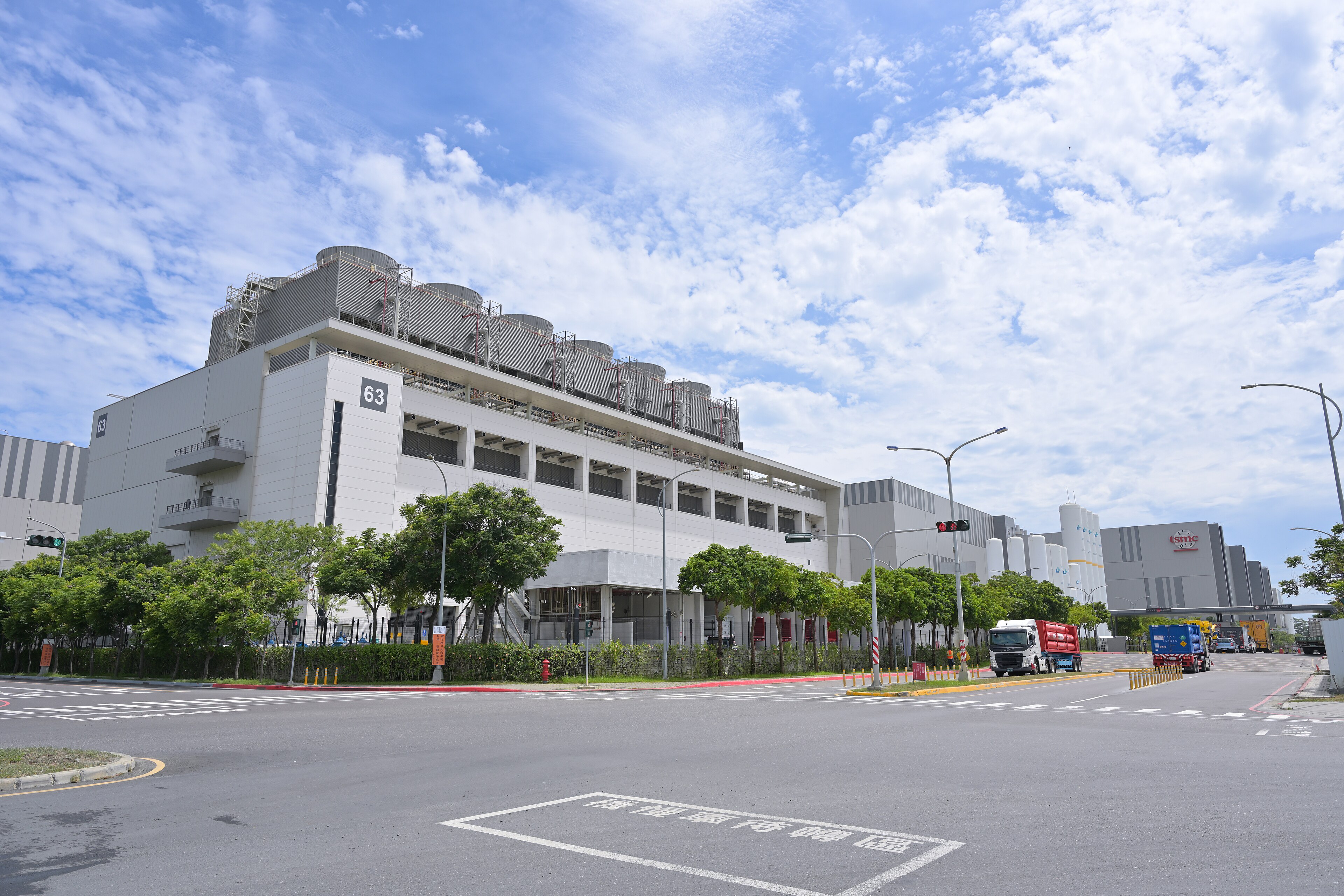
TSMC Chairman and CEO C.C. Wei told analysts on Oct. 15, 2026 that demand for AI chips runs ahead of supply, and the company raised its 2026 revenue growth forecast to about 44 percent in U.S. dollar terms 12. Third-quarter revenue reached $46.7 billion, above the top of TSMC's own guidance, and the fourth-quarter range of $52.3 billion to $54.3 billion implies another 14 percent step up at the midpoint.
TSMC's Oct. 15 call lifts compute 0.4 points
The moveThe data5 rows · sources
| Measure | Value |
|---|---|
| Reading before this day | 2.6 |
| This piece's move | +0.4 (Compute, confirmed) |
| Band for confirmed evidence | 0.8 to 1.5 |
| Reading after the day | 3.0 |
| Distance to 100 | 97.0 |
What did TSMC report on Oct. 15?
Chief Financial Officer Wendell Huang read the quarter. Revenue rose 16.2 percent from the second quarter in dollars, gross margin settled at 66.4 percent, and earnings per share reached NT$29.43 1. Net profit climbed 68.7 percent from a year earlier to NT$763.06 billion, the sixth straight record, according to DIGITIMES 4.
Capital spending stayed on plan. TSMC spent $13.8 billion on capex in the quarter and left the 2026 budget at $60 billion to $64 billion 12. Huang then pointed past the budget year. "We continue to expect our CapEx dollars investment from 2026 to 2028 and to be even more significantly higher than the past three years, as we continue to invest heavily to support our customers' growth," he said.
Read the sentence for its verbs. Huang kept the 2026 number and raised the expectation for the next two years, which tells an investor that a larger budget is coming but declines to name it. Budget cycles at TSMC run a year ahead of the fab openings they pay for, so the 2027 figure will carry the signal.
Does the demand claim rest on anything TSMC checked itself?
Laura Chen, an analyst at Citigroup, asked the question that the credit markets were asking that same morning. She wanted to know "how does TSMC reconcile customers' capacity requirement with some of the potential concern on the data center power availability, and also maybe funding recently," given the risk of overbuilding 1.
Wei answered with a list. "We put every possibility we can, talking about the CSPs, CapEx, data centers' build-out, financial, power supply, and also other components' supply, et cetera, into our consideration," he said, and then gave the verdict: "And so we make our own judgment -- and then based on our assessed demand, we still think the demand is higher than the supply, and we are working very hard to narrow the gap" 1.
The word "financial" sits in the middle of that list, between data centers and power. Wei put funding risk on the same footing as megawatts, and the answer that followed cited TSMC's own planning process while leaving every customer order unnamed.
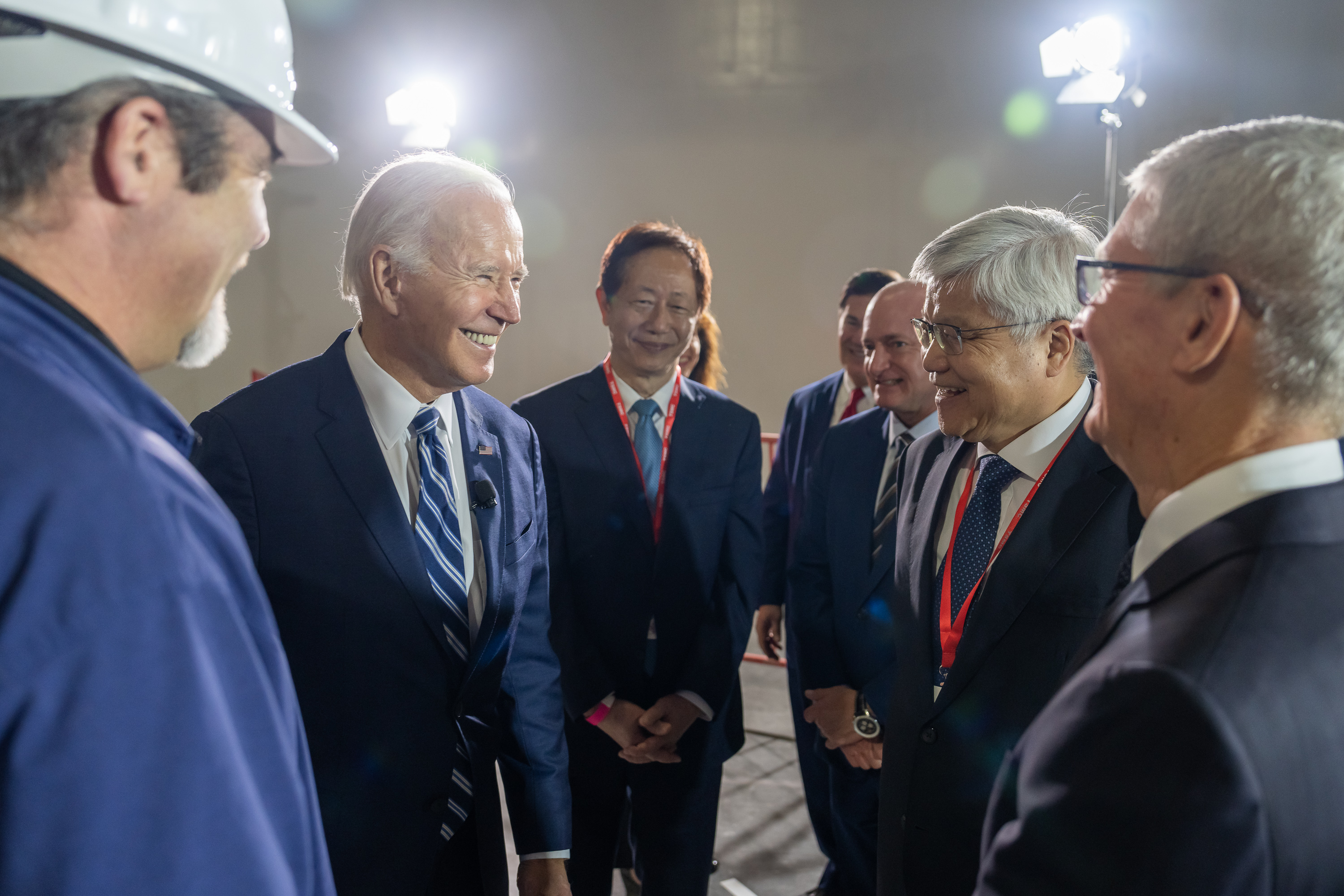
In the prepared remarks Wei described how TSMC checks. "We are now going one step further and sending our own teams of people to check on the data center build-out progress and power supply situation in the U.S. The feedback is so far so good, and the CSPs have been well prepared," he said 1. Arthur Lai of Macquarie asked whether grid limits had ever lowered a customer forecast. Wei replied that power is "one of the consideration factor" and moved to backside power rails. The history Lai asked about stayed unanswered.
Two kinds of fact separate in this section. Revenue, margin and capex are accounting entries. The site visits and the demand-supply gap are TSMC's account of its own inspections, with the inspectors and the findings both inside the company.

What TSMC reported, and what rests on TSMC's own checks
The recordThe data6 rows · sources
| Column | Item | Source |
|---|---|---|
| On the record | Q3 revenue of $46.7 billion, above the top of guidance | [1] |
| On the record | Gross margin of 66.4 percent, down 1.3 points | [1] |
| On the record | Q3 capex of $13.8 billion; 2026 budget at $60 to $64 billion | [1] [2] |
| Claimed by TSMC | Demand is higher than supply, by Wei's own assessment | [1] |
| Claimed by TSMC | Own teams checked US power and data centers: so far so good | [1] |
| Claimed by TSMC | AI accelerator growth probably tops the mid-to-high 50s CAGR | [1] |
Where does the 2nm ramp show up in the numbers?
The chips that carry the demand show up in the node mix. In the third quarter, the 2-nanometer process contributed 8 percent of wafer revenue, up from 3 percent in the second 12. Three-nanometer, 5-nanometer and 7-nanometer wafers took 33, 28 and 10 percent, so advanced nodes together supplied 79 percent of wafer revenue, which is where nearly every AI accelerator is made. High-performance computing grew 22 percent from the second quarter and now makes up 68 percent of revenue.
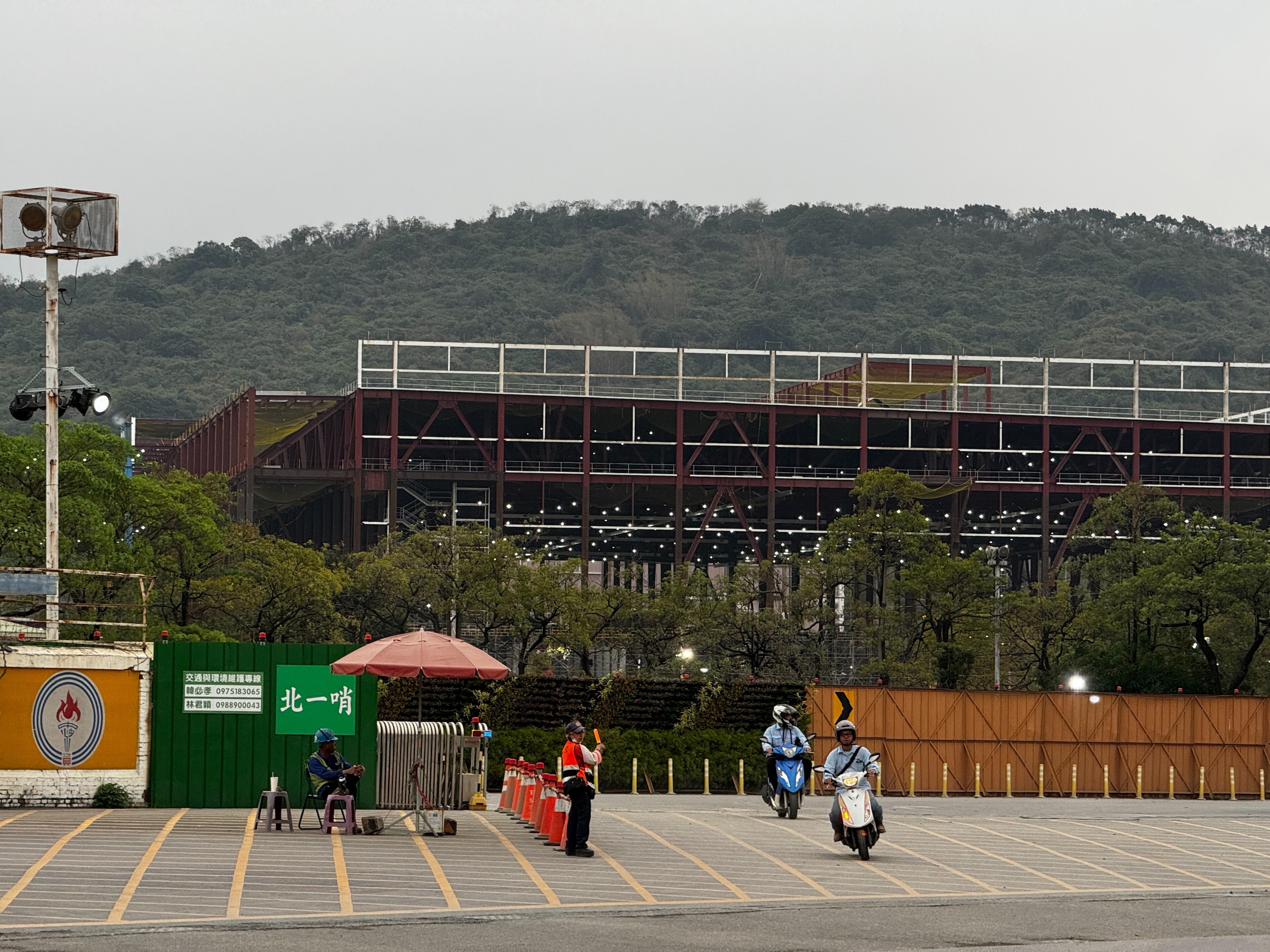
Wei supplied the physical plan. "TSMC is expanding at an unprecedented pace with nearly 20 fabs worldwide in progress," he said, counting 13 leading-edge and advanced packaging fabs in Taiwan and five to six overseas 1. The N2 family's annual capacity more than doubles in 2027. In Arizona, construction of the second fab is complete, tool installation has started, and volume production begins in the third quarter of 2027, slightly ahead of schedule.
Margins pay for the speed. Gross margin fell 1.3 points because of the 2-nanometer ramp, and Huang expects overseas fabs to dilute margin by about 2 points this year and 3 to 4 points in the next few years 1. TSMC chose to absorb that cost rather than slow the ramp. Wei put the posture plainly: "We have no intention to leave food on the table for others, and we want to capture every piece of business possible".
For the ledger, this is delivered capacity measured in a filing: wafers shipped, a node that went from 3 to 8 percent of revenue in one quarter, and a packaging line TSMC says it alone runs at 5x reticle size in production 1.

Advanced nodes made 79 percent of TSMC's Q3 wafer revenue
ComparedWhy is the step smaller than the record suggests?
Three reasons hold the move to 0.4 points. First, the capex budget stayed where it was, so the raised forecast reflects demand for capacity that exists already. Second, Wei described the consumer side in cautious terms: "We continue to observe consumer and price-sensitive end market segments are being challenged due to the impact of rising component prices and more economic uncertainties. As such, we are being prudent in our business planning going into 2027" 1. Third, the same day produced a record in the market that pays for the buyers.
Jim Reid, a strategist at Deutsche Bank, summed up the credit picture on Oct. 15. "AI financing costs aren't dramatic overall, but there are worrying themes at the edges," he said 3. CoreWeave's five-year credit default swap spread rose above 1,100 basis points that Thursday, and Oracle's reached 288 basis points. Kathleen Brooks, research director at XTB, offered a warning in her own words: "CoreWeave is quickly becoming the AI trade's canary in the coal mine".
The numbers behind those spreads are large. Alphabet, Amazon, Meta and Oracle had issued more than $228 billion of bonds in 2026 by Oct. 13, more than double their 2025 total, and JPMorgan puts hyperscaler spending near $800 billion this year and above $1 trillion a year by 2027 5. TSMC sells wafers to those buyers. Its order book depends on their ability to keep borrowing, and Wei's list of considerations included finance for that reason.
Reid's sentence supports the ledger as much as it limits it. His phrase "dramatic overall" describes an average across all borrowers, and the edges he flags are the buyers at the end of TSMC's supply line, where an order can be delayed when a lender raises its price.
C.C. Wei sees demand above supply; Jim Reid sees worry at the edges
Both sidesBy the numbers
- $46.7 billion: TSMC's third-quarter revenue, up 16.2 percent from the second quarter and above the top of guidance 1.
- 44 percent: the raised forecast for 2026 revenue growth in U.S. dollars, from slightly more than 40 percent in July 2.
- $60 billion to $64 billion: the 2026 capital budget, unchanged, after $13.8 billion of spending in the third quarter 12.
- 8 percent: the 2-nanometer share of wafer revenue, up from 3 percent in the second quarter 12.
- NT$763.06 billion: third-quarter net profit, up 68.7 percent from a year earlier 4.
- 66.4 percent: third-quarter gross margin, 1.3 points below the second quarter because of the 2-nanometer ramp 1.
- 1,100 basis points: CoreWeave's five-year credit default swap spread on Oct. 15, a record 3.
- $228 billion: bonds issued by Alphabet, Amazon, Meta and Oracle in 2026 through Oct. 13 5.
What to watch
TSMC's fourth-quarter result in January will test the $52.3 billion to $54.3 billion range, and the 2027 capital budget will show whether Huang's promise of higher spending lands near the top of the 2026 range or well above it. On the buyer side, CoreWeave reports quarterly results in November 5. Spreads that ease and bond issuance that clears would support Wei's reading, while a customer that cuts an order or a delayed data center would support Reid's concern about the edges.
Sources
- 1Q3 2026 Taiwan Semiconductor Manufacturing Company Limited Earnings Call (Chinese, English), TSMC Investor Relations (LSEG StreetEvents transcript), LSEG, Oct. 15, 2026
- 2TSMC raises 2026 sales growth forecast to 44%, leaves capex unchanged, Focus Taiwan (CNA), Chang Chien-chung, Chung Jung-feng and Frances Huang, Oct. 15, 2026
- 3CoreWeave and Oracle CDS Spreads Hit Records as AI Debt Costs Rise, TokenPost, Enna Lee, Oct. 16, 2026
- 4TSMC's AI-fuelled profit streak hits sixth straight record in 3Q26, but 2nm expansion weighs on margins, DIGITIMES, Levi Li, Oct. 15, 2026
- 5CoreWeave bonds trade like distressed debt as AI spending outpaces balance sheets, investingLive, Eamonn Sheridan, Oct. 15, 2026