Statnett Halts New Data Center Grid Reservations Until Aug. 1, 2027, Leaving 13,300 MW Waiting
Norway's grid operator Statnett froze new data center reservations on Nov. 9 while 13,300 megawatts sit reserved or queued against a 25,000-megawatt national peak, and ministers and industry leaders disagree on what follows.
By Ryan Elliott Dennis · 5 sources · 7 min read
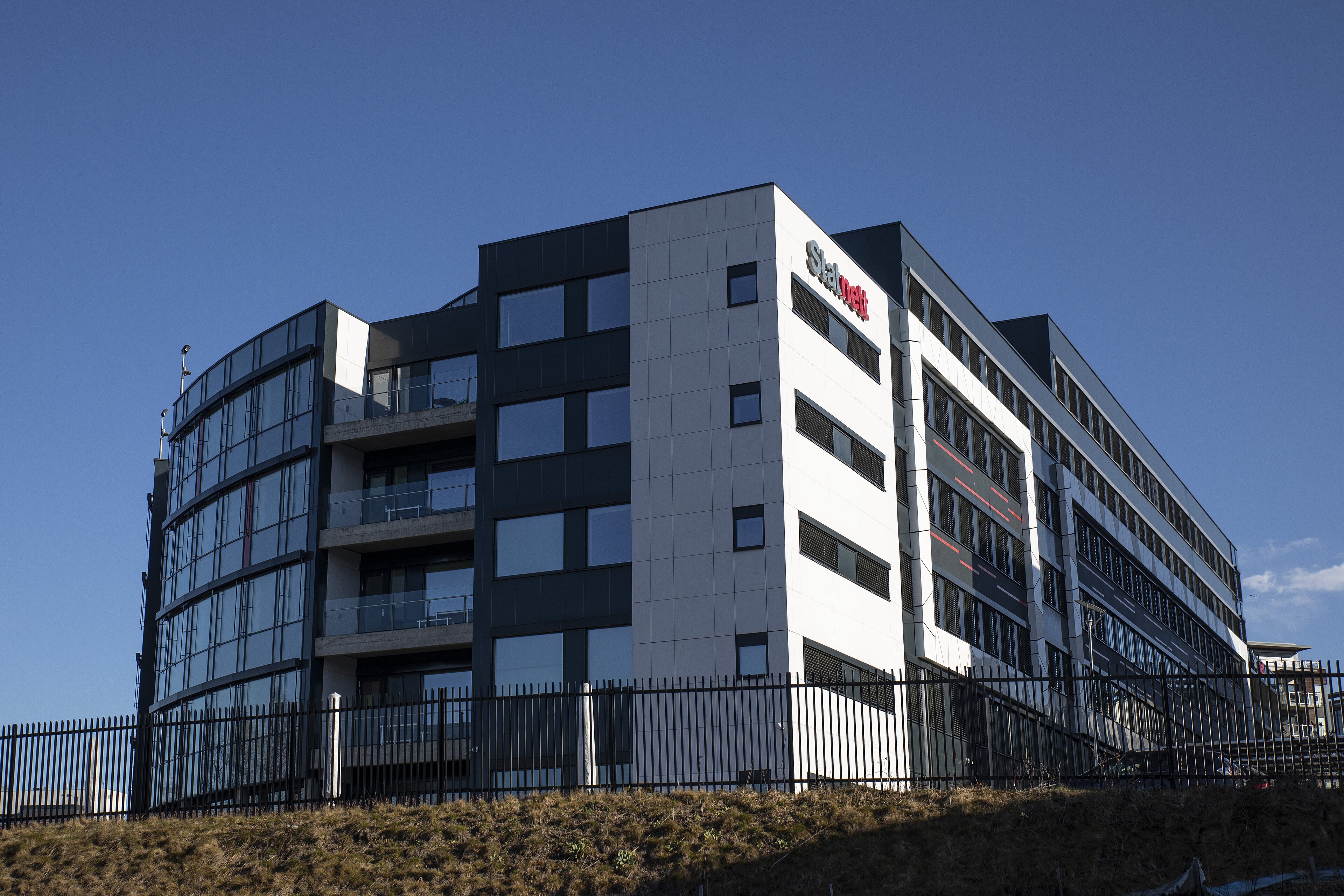
Statnett, Norway's national grid operator, halted new data center grid reservations on Nov. 9, 2026 and expects to lift the halt by Aug. 1, 2027 at the latest 1. Data centers already connected draw 800 megawatts. Another 4,200 megawatts sit reserved, and 9,100 megawatts wait in the capacity queue, a combined 13,300 megawatts that equals 53 percent of the 25,000 megawatts Norway needs at national peak, by this desk's arithmetic. The halt stops additions to that pile and leaves every existing claim on the grid in place.
Statnett's Nov. 9 halt takes 0.4 points off energy
The moveThe data5 rows · sources
| Measure | Value |
|---|---|
| Reading before this day | 5.2 |
| This piece's move | −0.4 (Energy, confirmed) |
| Band for confirmed evidence | 0.8 to 1.5 |
| Reading after the day | 4.8 |
| Distance to 100 | 95.2 |
What did Statnett stop on Nov. 9?
Statnett stopped three things, according to Energiteknikk: new connection reservations for data centers, processing of new applications for approval of plant functionality under the system-responsibility regulation, and processing of received applications for plants that connect directly to the 420 kV grid 1. The measure targets large consumers with a distinctive load profile, typically data centers. Statnett gave its reason in technical terms. Data centers swing power use quickly, run on software-controlled load and react more sharply to disturbances than the industrial plants the grid was built around.
Peer Olav Østli, Statnett's group director for system operations and market, put the purpose in one sentence 1. "Den midlertidige stansen er nødvendig for å få på plass virkemidler og rammeverk som sikrer at tilknytning skjer med håndterbare konsekvenser for kraftsystemet og systemdriften," he said. In English: the pause is needed to put tools and a framework in place so that connections carry manageable consequences for the power system and its operation. Read the adjective. Østli chose "håndterbare", meaning manageable, which treats the consequences as certain and leaves only their size open.
A second sentence from Østli shows where Statnett locates the problem. "Selv om den midlertidige stansen i praksis kun berører datasentre, vil ikke tilgjengelig kapasitet tildeles andre kunder," he said 1. Statnett will leave the freed capacity idle instead of giving it to a factory or a hydrogen plant. Scarcity would send the megawatts elsewhere. Load behavior keeps them parked until rules exist.
The rules are the exit. Statnett will draft functional requirements covering when a data center may disconnect during a disturbance, how fast its consumption may ramp, and how to damp oscillations on the grid 1. The requirements go to consultation and need approval from RME, Norway's energy regulator, and the halt lasts until they are in place with a way to enforce them. Plants whose requirements Statnett has already approved can still connect, and Statnett is considering a few smaller applications before Aug. 1, 2027.
Why does a 13,300 megawatt queue outweigh 800 megawatts of load?
Connected load is the smallest of the figures, and the case for the move rests on the larger ones. Reserved capacity of 4,200 megawatts is 5.3 times the 800 megawatts that data centers draw today, by this desk's arithmetic 1. Requests for a further 18,000 megawatts are on file, which is 72 percent of Norway's peak by itself. Add them to the reserved and queued figures and the pipeline reaches 31,300 megawatts, more than the whole country uses at its busiest hour.
The growth behind the pipeline is already measured. Menon Economics found that Norwegian data centers used 3.2 terawatt-hours of electricity last year, four times the figure of three years earlier 2. NRK reports that Google received 240 megawatts from Statnett for its data center in Skien. Nettavisen adds that the sector holds about half of the capacity reserved for new projects across the grid 4.
A halt changes one thing about those numbers. It closes the step from request to reservation. Every megawatt among the 18,000 that would have converted into a reservation in 2027 now waits for requirements still to be written. For the ledger, that is a confirmed act by the party that operates the wires. A grid operator pausing interconnection for the fastest-growing load class is the energy component of the reading moving down, and this desk records it at that component.
Norway's data center queue dwarfs the 800 MW connected today
ComparedWhat do the minister and the industry say?
Torgeir Micaelsen, Norway's minister for digitalisation and public governance, framed the policy around control 2. "Hensikten er å få mer kontroll på veksten av datasentre og sørge for at vi får de datasentrene vi faktisk trenger," he said. His word "faktisk", actually, divides the data centers into those Norway needs and those it merely receives. Energy minister Terje Aasland gave the physical version 4. "Vi må ha en kontrollert vekst av hensynet til nett, kraft og natur," he said, which lists three limits at equal standing.
The industry answered through Øystein Eriksen Søreide, chief executive of the trade group Abelia 2. "Regjeringen går lengre enn de hadde trengt, og lover mer enn de kan holde," he said, and he warned that a concession scheme invites political and bureaucratic chaos. Reynir Jóhannesson, who leads Norsk datasenterindustri, spoke about money. "Det investeres milliarder av kroner hver måned i norske datasentre der det aller meste går til leverandørindustrien," he said. Jóhannesson wants rules that apply over the short and the long term.
Parties in the Storting reacted across the spectrum, NRK reports 2. Tor Mikkel Wara of the Progress Party warned that a concession scheme could become "enda en byråkratisk hengemyr", yet another bureaucratic quagmire, with long processing times. Both sides use accurate figures and answer different questions. Østli and the ministers ask whether the grid can absorb load that swings. Søreide and Jóhannesson ask whether investors can plan around a halt followed by a licensing regime. Statnett's own schedule gives the second question its date: the government says the main principles of a concession scheme return in the autumn, and Nettavisen reports the scheme is meant to be ready in autumn 2027 4.


Statnett's Østli backs the halt; Abelia's Søreide calls it overreach
Both sidesThe data2 rows · sources
Why is the step smaller than the halt sounds?
The ledger step is 0.4 points down, short of the 0.8 to 1.5 that confirmed evidence earns. Three facts hold it there. First, existing connections stay as they are, and Statnett says the halt covers new reservations and new applications only 1. The 800 megawatts online and the 4,200 megawatts reserved proceed on their current terms. Second, the halt ends by Aug. 1, 2027, a span of 265 days from the announcement by this desk's count 5. Third, the connected load of 800 megawatts sits below one gigawatt, the energized level that tops the method's band for energy.
Against the headline stands the size of what stays exempt. Reserved capacity runs 5.3 times connected load, which means most claims on the grid were filed before Nov. 9 and the halt arrives after them. That cuts the effect of the halt on 2027 and 2028 energizations to a small number. The answer lies in the sequence. Reserved megawatts still need functional approval, and the new requirements apply to that stage, so the 4,200 megawatts reach the wires under tighter terms. The halt reshapes the queue even where it leaves the reservations alone.
Statnett describes the measure as neutral and even-handed in treatment 1. It removes one class of load from the process, though, so the instrument is neutral in procedure and specific in effect. That gap explains why Søreide calls the government's course wider than necessary.
Each side needs something to be true. Østli's side needs RME to approve ramping and ride-through requirements before Aug. 1, 2027, and needs data centers to meet them. Søreide's side needs the concession scheme to arrive with transition rules and short processing times. The verdict for readers who track power as a constraint: treat Norway as a slower market through 2027, and treat Statnett's requirements as a template other Nordic operators may copy. Statnett said it will harmonize with the other Nordic operators and ENTSO-E 1.


What Statnett's halt covers, and what stays exempt or open
The recordThe data7 rows · sources
| Column | Item | Source |
|---|---|---|
| On the record | New data center reservations and applications stop on Nov. 9, 2026 | [1] |
| On the record | The halt is expected to end by Aug. 1, 2027 at the latest | [1] |
| On the record | Freed capacity goes to no other customer | [1] |
| Exempt or open | Existing connections and approved plants proceed | [1] |
| Exempt or open | Reserved 4,200 MW is 5.3 times connected load | [1] |
| Exempt or open | Requirements still need consultation and RME approval | [1] |
| Exempt or open | Concession scheme timing reported as autumn 2027 | [4] |
By the numbers
- 800 MW: data center capacity connected to Norway's grid on Nov. 9, 2026 1.
- Reserved capacity totals 4,200 MW, which is 5.3 times connected load, by this desk's arithmetic 1.
- A further 9,100 MW waits in Statnett's capacity queue, and requests for 18,000 MW more are on file 3.
- Norway's maximum power use runs a little above 25,000 MW 4.
- Data centers used 3.2 TWh of electricity last year, four times the figure of three years earlier, according to Menon Economics 2.
- Google holds 240 MW from Statnett for its Skien data center 2.
- Aug. 1, 2027 is the latest date for the halt to end, 265 days after the announcement 5.
What to watch
RME's handling of Statnett's functional requirements sets the halt's length, because the halt lifts when they are approved and enforceable. The 4,200 megawatts of reserved capacity will show whether energization follows the old terms or the new ones. A rise in connected load past 800 megawatts, or a published consultation draft before spring 2027, would shorten the halt. Postponement past Aug. 1, 2027 or a concession scheme that reopens reservations on new conditions would extend it and deepen this step.
Sources
- 1Statnett stanser nye datasenter-reservasjoner, Energiteknikk, Øyvind Zambrano Lie and Trygve Tomren-Berg, Nov. 9, 2026
- 2Strammer grepet: Lager nye regler for datasentre, NRK, Kristian Skårdalsmo and Helge Aadland Carlsen, Nov. 9, 2026
- 3Setter foten ned for nye datasentre, Anlegg&Transport, Fredrik Saugstad, Nov. 9, 2026
- 4Regjeringen varsler konsesjonsordning for datasentre, Nettavisen, Heidi Schei Lilleås and Vibeke Johannessen, Nov. 9, 2026
- 5Staten stopper nye datasentre til neste år, Lofotposten, Joakim Midtbø Viland, Nov. 9, 2026