The State Department Signs Nine Partners to a Declaration That Leaves Export Rules With Each Capital
Jacob Helberg's State Department signed nine partner governments to the San Francisco Declaration on Nov. 15; the text defines what to protect, proposes five working groups and keeps each country's export rules its own.
By Ryan Elliott Dennis · 14 sources · 10 min read
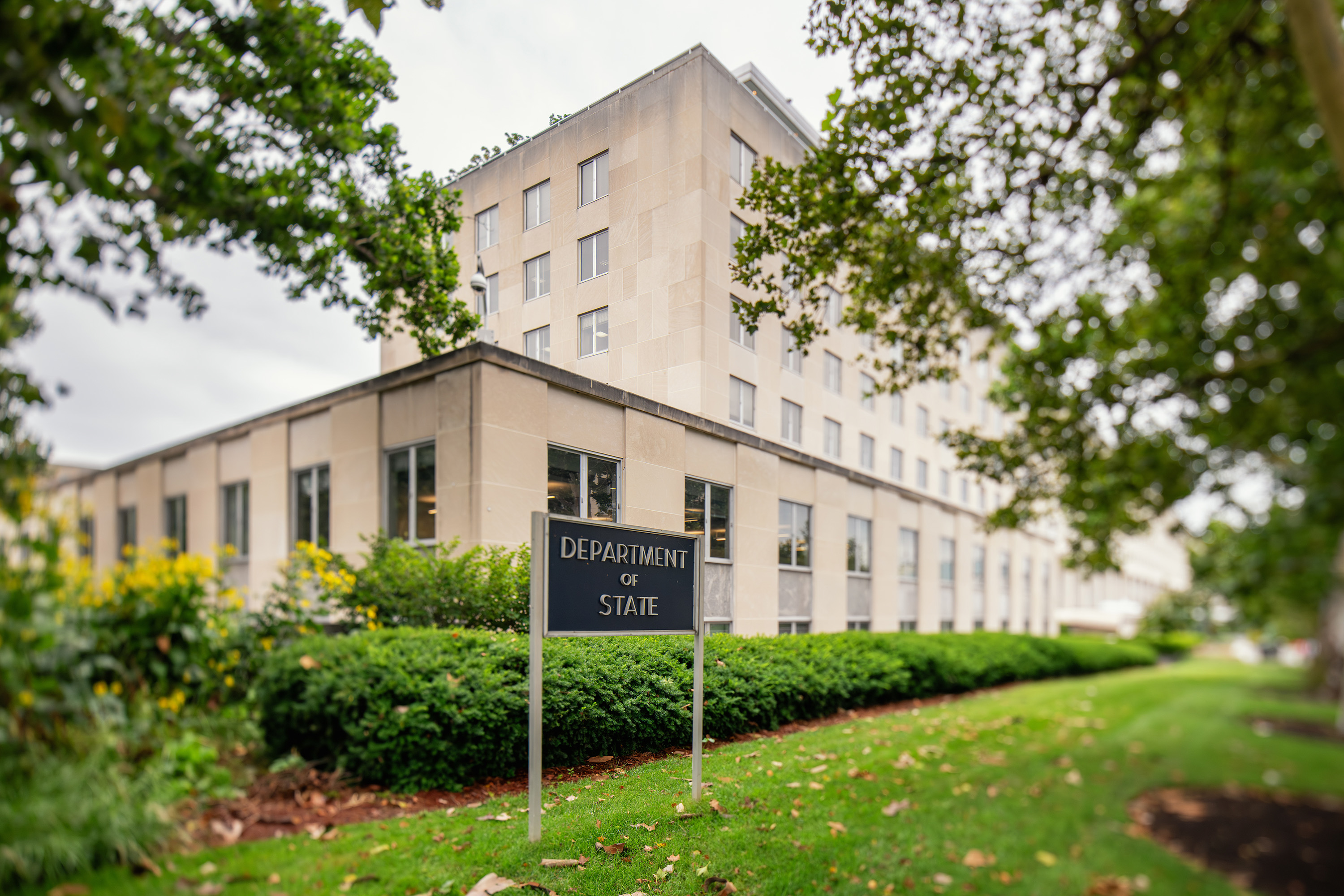
The U.S. State Department and nine partner governments signed the San Francisco Declaration on the Secure Foundations of Enduring Prosperity on Nov. 15, 2026, at a retreat that Under Secretary of State Jacob Helberg convened in San Francisco 1. Its text defines two things to protect, sensitive technologies and critical infrastructure, and proposes five working groups. Export rules stay where they stood on Nov. 14: with each of the ten capitals.
Why should a data center builder read a diplomatic statement? Chips, memory and the machines that make them cross several borders before a rack powers on. A rule binding ten governments at once would change what an operator in Seoul, Singapore or Abu Dhabi may buy and whom it may serve. This declaration sets shared definitions and leaves that rule for later.
The State Department's ten-government declaration leaves governance flat
The moveThe data5 rows · sources
| Measure | Value |
|---|---|
| Reading before this day | 7.5 |
| This piece's move | 0.0 (Governance, confirmed) |
| Band for confirmed evidence | 0.8 to 1.5 |
| Reading after the day (with 1 other piece that day) | 7.5 |
| Distance to 100 | 92.5 |
What does the declaration bind ten governments to?
Ten governments released the text: the United States, Australia, India, Israel, Japan, South Korea, Qatar, Singapore, the United Arab Emirates and the United Kingdom 1. An early relay of the Financial Times report, carried by Newsmax, named eight partners and left Singapore out 11.
Read the verbs. In the U.S. State Department's release, the signers are "recognizing," "reaffirming" and "resolved," and then they "declare our common understanding" of two categories. Sensitive technologies come first, defined as "goods, software, materials, knowledge, components and inputs used to produce them, and their means of production essential to SI supply chains." SI stands for super intelligence, the administration's term, and a footnote says some participants use the term artificial intelligence instead, ANI reported 13. Critical infrastructure comes second: ports, terminals, transport, communications and logistics networks, plus the energy and information systems beneath them.
One clause covers enforcement. The U.S. State Department and its partners reaffirm "the importance of cooperation on the enforcement of our respective policies to protect sensitive technologies and critical infrastructure from undue access, influence, or control" 1. Two words carry the weight: "our respective." Japan's control list stays Japan's. South Korea's licensing stays South Korea's, and the text leaves both lists as they were.
Five proposed groups would cover pro-innovation policy frameworks, SI adoption in key sectors, supply chain cooperation across the SI stack, safe harbors and supply chain security hubs, and SI security and resilience. Poland Insight reported on Nov. 15 that the hubs' locations, financing arrangements and investment timetables were still unspecified 6.
Why does Helberg call it historic?
Helberg made his case to the Financial Times, in remarks that Taiwan News carried on Nov. 16 2. "The know-how to design a chip, the machine that makes it and the port that ships it can all be in different countries," he said. "What makes the San Francisco Declaration historic is that Pax Silica partners have agreed to treat the security of those technologies and the infrastructure behind them as a shared responsibility."
His first sentence describes the chip supply chain accurately. Poland Insight's account places chip design strength in the United States, materials and manufacturing equipment in Japan, and memory production in South Korea 6. SemiAnalysis, the chip research publication, wrote on Nov. 12 that Nvidia secured its memory in South Korea and its chips in Taiwan 7.
Look at the verb in his second sentence: partners agreed to "treat" security as shared. A treaty verb would say what each party must do when a shipment goes missing. This one describes an attitude.
The department's release claims more than its under secretary did. "With the San Francisco Declaration, the coalition cements its shared principles into a working partnership with a common baseline and a path to act on it," the U.S. State Department said 1. It added: "No nation can secure the foundations of the SI era alone, and the prosperity SI makes possible will only be as durable as the supply chains and infrastructure beneath it."

Which chip countries signed, and which are still out?
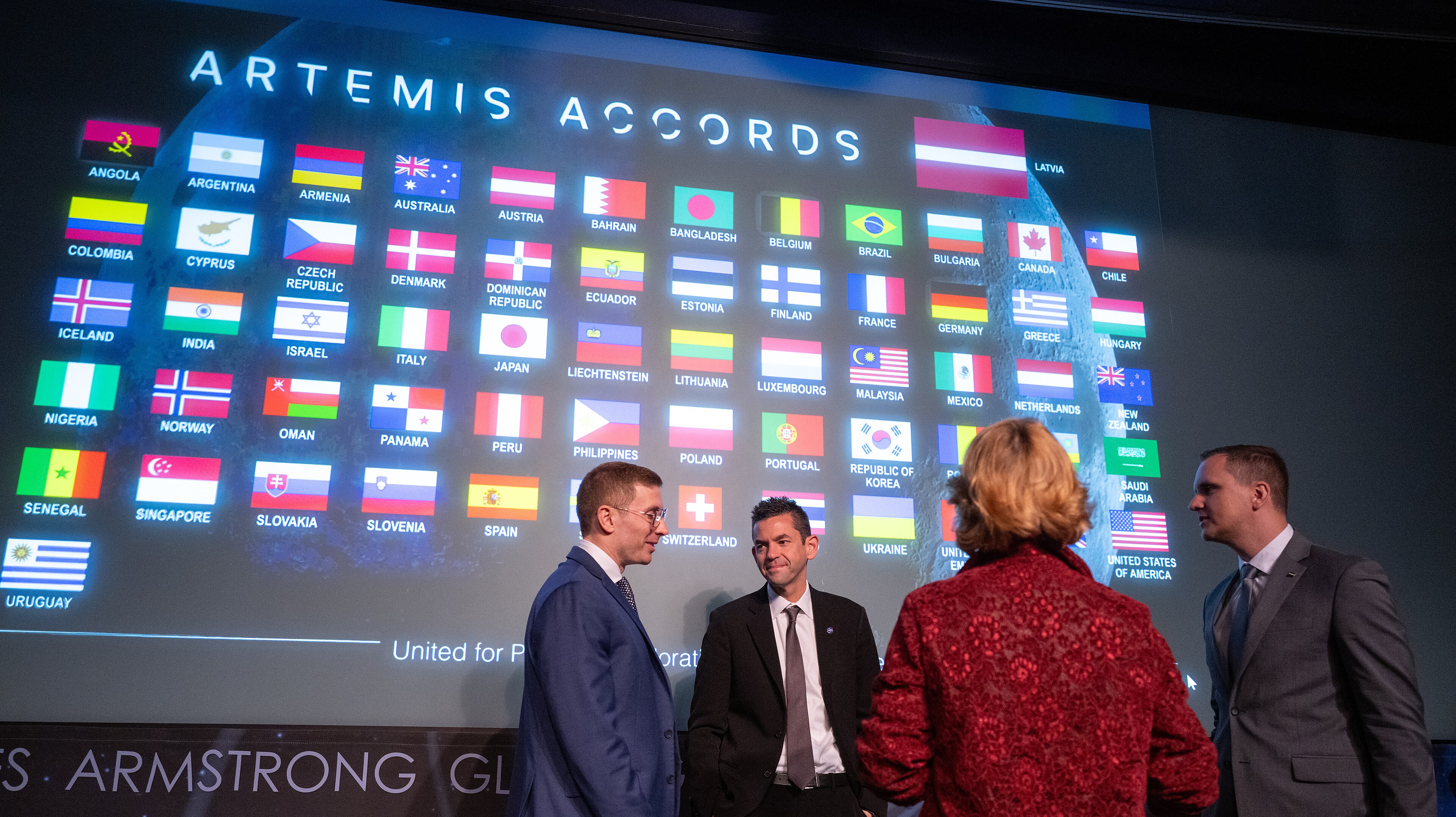
Pax Silica began in December 2025, and India joined as its tenth signatory on Feb. 20, 2026 10. Ten more partners, including Germany, the Netherlands and the European Union, signed the original declaration in June, which took membership to 24, according to the State Department figures that Convergence Now cited 12. So ten of 24 members signed the new text on its first day.
South Korea sent Second Vice Foreign Minister Kim Jin-a, who signed in person as head of her government's delegation, Korea JoongAng Daily reported 3. With Japan's signature beside hers, a leading memory producer and a supplier of chipmaking materials and equipment are inside the text 6.
Europe is the gap. Helberg said Germany, Sweden, the Netherlands and the European Commission are expected to sign, and accounts differ on the week 23. That list includes the Netherlands, home of the chip-equipment maker ASML 14. Agence Europe reported that EU member states authorized the Commission on Nov. 11 to negotiate the text, which the State Department had proposed signing at the Nov. 15 retreat 5. "But the Member States requested more time to ensure that the declaration is fully aligned with the EU's approach to economic security," Agence Europe wrote. EU diplomats also raised concerns about the text's references to superintelligence and their fit with the bloc's AI rules, Convergence Now reported 12.
Taiwan, where SemiAnalysis places Nvidia's chip supply, sits outside the State Department's list of ten 17.
Ten of Pax Silica's 24 members signed the new text on Nov. 15
ComparedDoes Beijing read it as a bloc?
China goes unnamed in the declaration, and its language about "economic coercion" and "hostile actors" makes the concern plain, The Wire wrote on Nov. 16 10. A source familiar with the matter told Korea JoongAng Daily that Pax Silica exists for trusted countries to build supply chains together, and that excluding a particular country lies outside its aim 3.
Beijing answered within a day. A Bloomberg reporter asked foreign ministry spokesperson Mao Ning on Nov. 16 whether the agreement would affect the coming meeting of the two presidents 4. "China believes that artificial intelligence is a shared asset of humanity, and that there should be no drawing lines along ideological differences or forming exclusive groupings," Mao said. She added that the two sides are in communication about the meeting.
Her objection is to the grouping itself. Three days earlier she had addressed the rules a grouping might write: China "has consistently opposed the abuse of export control measures, which disrupts the stability of global industrial and supply chains and serves no party's interests," Mao Ning told a Nov. 13 briefing, according to CBS News and AFP 8.
What gives her words weight? Donald Trump and Xi Jinping are expected to meet at the APEC summit in Shenzhen on Nov. 18 and 19 12. Korea JoongAng Daily expects those talks to center on a trade between Chinese rare earths and U.S. AI technology 3.

Where do the binding rules sit?
They sit in Congress and the Commerce Department. Jensen Huang resigned as Nvidia's chief executive on Nov. 11, and the Trump administration's oversight of advanced chip exports to China came under scrutiny 10. House Speaker Mike Johnson has said there is "growing consensus in Congress on limiting chip exports to China," The Verge reported on Nov. 15, citing Reuters 9. Commerce Secretary Howard Lutnick has agreed to testify before the Senate Banking Committee on Dec. 10, according to a U.S. official cited by CBS News 8.
One bill would change deployment directly. The Remote Access Security Act passed the House 369 to 22 on Jan. 12 and awaits a Senate vote, SemiAnalysis wrote in a Nov. 12 report bylined by Dylan Patel and three co-authors 7. It would stop Chinese companies from renting restricted chips in data centers abroad. SemiAnalysis says its own model tracks more than 1.5 gigawatts of restricted Nvidia chips that reached China anyway.
SemiAnalysis supports some limits and opposes this one. "This sort of legislation will have consequences, and we don't think politicians are thinking them through," it wrote. Its list of reasons includes a line the declaration's drafters might reread: "American companies such as NVIDIA, AMD, Broadcom, Google, Amazon, Microsoft, Meta, Supermicro, and Dell all depend on Chinese companies in their supply chain." The ten governments, for their part, reaffirmed the goal of "reducing excessive dependencies through diversified and trusted supply chains" 1.
The House voted on chip rentals ten months before ten governments signed
TimelineThe data8 rows · sources
| Date | Event | Source |
|---|---|---|
| House passes the Remote Access Security Act, 369 to 22 | [7] | |
| India joins Pax Silica as its tenth signatory | [10] | |
| EU member states authorize the Commission to negotiate; Huang resigns at Nvidia | [5] [10] | |
| Mao Ning warns against new export controls on chips | [8] | |
| Ten governments sign the San Francisco Declaration | [1] | |
| Mao Ning objects to exclusive groupings in AI | [4] | |
| APEC summit opens in Shenzhen, where Trump and Xi are expected to meet | [12] | |
| Lutnick's Senate Banking testimony, per a U.S. official | [8] |
Why does governance hold flat?
The ledger's governance question is whether the rules allow deployment at the definition's scale. Three readings are available: up, down and flat.
Up first, because it is the strongest case against this piece's claim. Ten governments, including the homes of leading memory and equipment makers, now share a written definition that reaches "means of production," and the U.S. State Department calls the result a working partnership with a path to act 1. Jointly guarded supply would lower the risk that one country's dispute strands a campus.
Down has a case too. If the working groups produce a shared control list, operators that rent capacity to Chinese customers would lose business, and SemiAnalysis counts such neoclouds in Asia, Australia, the Middle East and Europe 7. Beijing also holds the rare earth supply that Korea JoongAng Daily describes as its pressure point 3.
Flat is what the text supports. The groups are "proposed." Hub sites, money and dates are blank 6. EU member states asked for more time 5. On enforcement, the declaration points each signer back to its own policies. Every license rule that applied to a chip buyer on Nov. 14 applied on Nov. 16, so the reading holds at confirmed confidence with a step of 0.0.
What the San Francisco Declaration states, and what it leaves open
The recordThe data9 rows · sources
| Column | Item | Source |
|---|---|---|
| In the text | Ten governments declare a common understanding of two categories | [1] |
| In the text | Sensitive technologies reach components, inputs and means of production | [1] |
| In the text | Critical infrastructure covers ports, transport, communications and energy systems | [1] |
| In the text | Signers cooperate on enforcing their respective policies | [1] |
| In the text | Five working groups are proposed | [1] |
| Open | Hub locations, financing arrangements and investment timetables | [6] |
| Open | Signatures from Germany, Sweden, the Netherlands and the European Commission | [2] [5] |
| Open | A joint list that changes one signer's license rule | [1] |
| Open | Senate vote on the Remote Access Security Act | [7] |
What would each side need to be true?
Helberg's case holds if a working group publishes a joint list and one signer changes a license rule because of it. Mao's holds if that list becomes a common export control and Beijing answers with its own, on rare earths or elsewhere.
For the people who plan, finance and staff these campuses, the open question is which document will set their supply. Count the San Francisco Declaration as a shared definition. Treat the Senate's vote on the Remote Access Security Act and any Commerce Department rule as the rules themselves, and move the governance reading when one of those changes.
Helberg calls the declaration historic; Mao Ning objects to exclusive groupings
Both sidesThe data2 rows · sources
| Side | Who | Claim | Source |
|---|---|---|---|
| For | Jacob Helberg | Pax Silica partners have agreed to treat the security of those technologies and the infrastructure behind them as a shared responsibility. | [2] |
| Against | Mao Ning | Artificial intelligence is a shared asset of humanity, and there should be no drawing lines along ideological differences or forming exclusive groupings. | [4] |
By the numbers
- 10: governments that released the San Francisco Declaration on Nov. 15, counting the United States 1.
- Five working groups are proposed, including one on safe harbors and supply chain security hubs 1.
- 24: Pax Silica's membership after ten partners joined in June 2026, according to State Department figures cited by Convergence Now 12.
- Four more signers are expected, by Helberg's account: Germany, Sweden, the Netherlands and the European Commission 2.
- 369 to 22: the House vote for the Remote Access Security Act on Jan. 12, with the Senate vote still pending 7.
- More than 1.5 gigawatts of restricted Nvidia chips reached China, by the SemiAnalysis tracking model 7.
- Nov. 11: the day EU member states authorized the Commission to negotiate the text, four days before the signing they then deferred 5.
What to watch
Signatures from Germany, Sweden, the Netherlands and the European Commission would bring the home of ASML inside the text, and a further EU delay would confirm the doubts Agence Europe recorded 5. A published joint list from any of the five working groups, with a signer changing a license rule to match, would move governance up; a Senate vote on the Remote Access Security Act would move it on its own evidence 7. The Trump and Xi meeting in Shenzhen on Nov. 18 and 19 will show whether rare earths and chip access trade against each other 12.
Sources
- 1San Francisco Agreement on secure supply chains signed, U.S. State Department (via Electronics Weekly), David Manners, Nov. 16, 2026
- 2US leads partners in pact to secure AI supply chains against China, Taiwan News, Taiwan News staff writer, Nov. 16, 2026
- 3Korea joins US-led AI supply chain security pact ahead of Trump-Xi talks, Korea JoongAng Daily, Kang Tae-hwa and Yoon Ji-won, Nov. 16, 2026
- 4Foreign Ministry Spokesperson Mao Ning's Regular Press Conference on November 16, 2026, Ministry of Foreign Affairs of the People's Republic of China, Nov. 16, 2026
- 5'Pax Silica': European Commission authorised by EU27 to join new US declaration on economic security, Agence Europe, Solenn Paulic, Nov. 13, 2026
- 6US and Eight Partners Sign AI Supply Chain Declaration, Poland Insight, Poland Insight Editorial Team, Nov. 15, 2026
- 7Is NVIDIA Over? Export Controls, RASA, Open Source Implications, Supply Chain Implications, Affair, US Still Dependent On China, SemiAnalysis, Dylan Patel and three co-authors, Nov. 12, 2026
- 8China warns against new U.S. export controls on chips in wake of Nvidia's Huang scandal, CBS News, CBS/AFP, Nov. 13, 2026
- 9Congress wants to tighten export rules on AI chips after Nvidia spy scandal, The Verge, Terrence O'Brien, Nov. 15, 2026
- 10India Signs New Pax Silica Declaration on Jointly Protecting AI Supply Chains, Critical Infrastructure, The Wire, The Wire Staff, Nov. 16, 2026
- 11Report: US, Allies Sign Accord to Protect AI Supply Lines From China, Newsmax (via Yahoo News), Newsmax Wires, Nov. 15, 2026
- 12India Joins US-Led AI Supply Chain Pact as Washington Steps Up on Global Technology Push, Convergence Now, Samarjit Kaur, Nov. 16, 2026
- 13US, India and 8 other nations sign San Francisco Declaration to secure super intelligence supply chains ahead of Quad summit, ANI, Nov. 16, 2026
- 14US and eight partners sign a pact to protect AI supply chains from China, FT reports, MLQ.ai, MLQ.ai Newsroom, Nov. 16, 2026