Senate Passes a $55 Billion Data Center Grid Charge Inside a Bill Hyperscaler Groups Endorse
The U.S. Senate voted 62-33 on Nov. 19 to charge data centers an estimated $5.53 billion a year for transmission, two hyperscaler trade groups back the bill, and governance moves up 0.2.
By Ryan Elliott Dennis · 12 sources · 10 min read
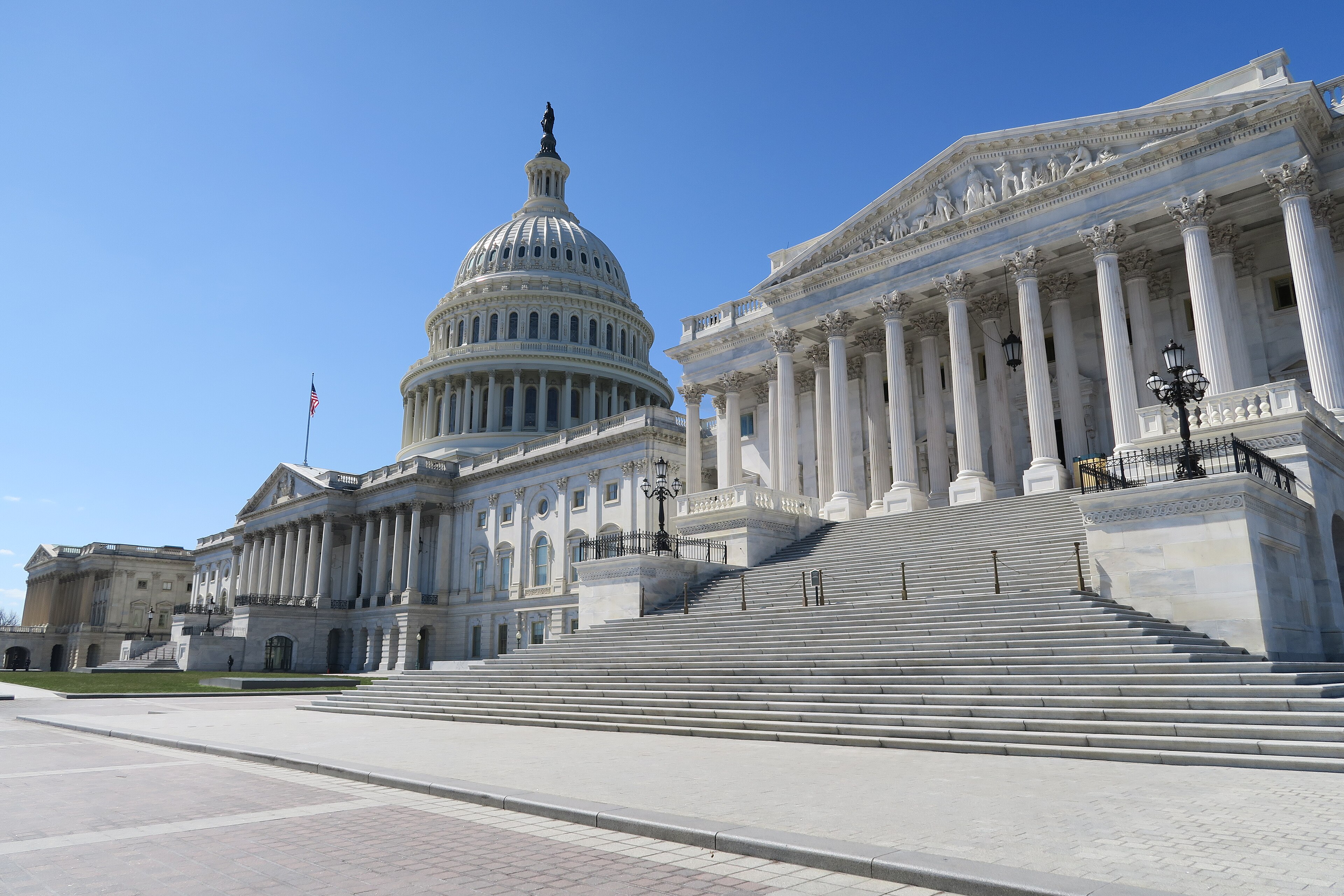
The U.S. Senate voted 62-33 on Nov. 19, 2026 to pass the Bipartisan American Affordability and Jobs Act, a permitting bill that orders federal regulators to charge data centers for the grid they use and the grid built to serve them 15. Grid Strategies, a power consulting firm, prices that charge at $55 billion over ten years, or $5.53 billion a year spread across 40.3 gigawatts of new campuses 3. Two trade groups whose members include Amazon, Google, Meta and Microsoft endorsed the bill three weeks before the vote, Latitude Media reported 7. So the companies facing the charge have lobbyists asking for the law that carries it. House members get the bill next, and their Congress ends on Jan. 3 9.
The Senate's 62-33 vote on Nov. 19 adds 0.2 points to governance
The moveThe data5 rows · sources
| Measure | Value |
|---|---|
| Reading before this day | 8.4 |
| This piece's move | +0.2 (Governance, confirmed) |
| Band for confirmed evidence | 0.8 to 1.5 |
| Reading after the day (with 2 other pieces that day) | 8.6 |
| Distance to 100 | 91.4 |
What did 62 senators vote for on Nov. 19?
The Senate's roll call shows 47 Republicans, 14 Democrats and Angus King, the Maine independent, voting yes 1. Thirty Democrats, independent Bernie Sanders and two Republicans, Josh Hawley of Missouri and Mike Rounds of South Dakota, voted against. Five senators missed the vote. Chuck Schumer, the Democratic leader, voted yes 5.
Senators used a House tax bill, H.R. 2347, as the vehicle. On Nov. 18 they replaced its text with a substitute from Shelley Moore Capito, Amendment 6883, by 69 votes to 27 1. This desk read the 494-page substitute that Capito, Mike Lee, Sheldon Whitehouse and Martin Heinrich posted on Nov. 7 4. Section 2107 of that text holds the data center language, and it works through two channels.
Channel one runs through the Federal Energy Regulatory Commission. Within 90 days of enactment, FERC must revise its 1994 transmission pricing policy so that utilities charge data center customers the embedded cost and "a reasonable assessment" of the incremental cost of transmission service 4. Embedded cost is a customer's share of the grid already standing. Incremental cost is the price of lines and substations built because that customer arrived. Charging one customer both was long treated as an illegal double charge, Latitude Media noted, and the bill reverses that for computing loads alone 7.
A second channel adds Section 229 to the Federal Power Act. It bars utilities from putting a data center's incremental cost into any other customer's rates, keeps the data center paying after it exits a contract, and lets states charge such loads more than cost and treat them as a separate, less favored class 4. That section covers sites that interconnect on or after the day the bill becomes law.
Heinrich, the ranking Democrat on the Energy and Natural Resources Committee, gave the sponsors' case in a statement after the vote 2. "The Bipartisan American Affordability and Jobs Act will get more affordable energy onto the grid faster, make data centers pay their fair share of electricity and grid costs, and create more than 100,000 good-paying American jobs — all while maintaining important environmental protections and strengthening Tribal consultation," he said. Look at the order of his clauses. Faster energy comes first and the charge comes second, the same order in which data center developers rank them.


Grid Strategies priced the bill five days before the sponsors rewrote it
TimelineThe data6 rows · sources
| Date | Event | Source |
|---|---|---|
| Grid Strategies publishes its $55 billion estimate | [3] | |
| Four sponsors post a 494-page substitute amendment | [4] | |
| Senate adopts the Capito substitute 69-27 | [1] | |
| Senate passes the bill 62-33 | [1] | |
| Speaker Johnson asks House Republicans for full attendance | [9] | |
| Congress ends and Democrats take both chambers | [9] |
Why do hyperscaler groups back a $55 billion charge?
Two groups endorsed the bill by Oct. 29: the Corporate Energy Buyers Association and the Electricity Customer Alliance, which between them represent Amazon, Google, Meta and Microsoft 7. Jeff Dennis, the alliance's executive director, described his members' position to Latitude Media. "They are willing to pay more than their own costs to make sure other customers are treated fairly," Dennis said. An endorsement list that Heinrich's office linked from its Nov. 19 release still names the buyers association 2.
Why would a payer volunteer? Grid Strategies puts the federal charge at $5.53 billion a year 3. Michele Nellenbach, vice president of federal affairs at the Data Center Coalition, told Bisnow on Nov. 20 that the coalition is "continuing to evaluate the bill's extensive and complex implications with our members, who are doing their part to address affordability and economic growth by investing hundreds of billions of dollars in the U.S. annually" 6. Against $200 billion, the low end of her phrase, $5.53 billion comes to under 3 percent, by this desk's arithmetic.
What Amazon, Google, Meta and Microsoft get for that 3 percent is time. The bill sets deadlines for federal reviews, cuts the window for lawsuits from years to 150 days, and gives Washington more power to approve interstate lines that states block or delay 12. Jeff Thramann, chief executive of the data center developer LT350, stated the trade plainly 6. "Speed to certainty is going to help everybody, and there's no way around it that data centers are going to have to pay for some of the infrastructure," he said.
Lee, the Utah Republican who chairs the energy committee, uses the charge as his answer to critics who call the bill a favor to data center developers 11. "BAAJA actually makes data centers pay more to interconnect to the grid to ensure other customers' rates don't increase," he told the Deseret News. Both statements hold at once: the bill raises what a campus pays and shortens how long it waits.
Heinrich says data centers pay their share; Hawley says they get giveaways
Both sidesThe data2 rows · sources
| Side | Who | Claim | Source |
|---|---|---|---|
| For | Martin Heinrich | The bill gets affordable energy onto the grid faster and makes data centers pay their fair share of electricity and grid costs. | [2] |
| Against | Josh Hawley | The bill threatens to take farmers' land and is stuffed with giveaways to data centers and industry at the expense of farmers. | [8] |
What would one megawatt pay, and when?
Divide the paper's totals. Grid Strategies spreads $5.53 billion a year over 40.3 gigawatts, which works out to about $137,000 per megawatt each year, or $137 million a year for a one-gigawatt campus 3. At the 70 percent load factor the paper assumes, that equals roughly 2.2 cents per kilowatt-hour. Data centers pay about $2 billion a year for transmission today, the paper estimates, using a transmission share of 14 percent of an 8.3 cent commercial rate, or near 1.2 cents. Each per-megawatt figure is this desk's arithmetic.
MISO, the grid operator for the central states, holds 16.7 of the 40.3 gigawatts in the paper's count, and PJM holds 13.4. Those 40.3 gigawatts equal four times the ten-gigawatt threshold in this ledger's definition of superintelligence.
Grid Strategies states the consequence plainly. Because a data center would pay both cost types while its incremental payments get credited to everyone else, the authors write that data centers "would most likely pay more than the total cost they impose" 3. Their estimate rests on the bill as filed on Sept. 30, and the authors flag its limits themselves: "The bill text does not address the timeline for applicability of the new 'and' pricing policy."
When would a dollar change hands? This journal's Sept. 30 analysis counted 905 days from enactment to a final FERC rule in the bill as filed. The substitute cuts that to 455 days: 90 days for the revised policy and a proposed rule, then one year for the final rule 4. A signature by Jan. 3, 2027 would put the final rule near April 2028, by this desk's count. Utilities would also revise rates for existing customers once the final rule issues. Nidhi Thakar, senior vice president for policy at the Corporate Energy Buyers Association, named where the money gets decided 7. "A lot of this will have to get worked out in a FERC rulemaking," she said. Until that rule exists, a megawatt energized this winter pays whatever its state commission already set.

Grid Strategies: $5.53 billion a year under the bill against $2 billion today
ComparedWhy is the step only 0.2 points?
One chamber voted, and the House calendar is short. Speaker Mike Johnson wrote to Republicans on Nov. 20 asking for full attendance, Agri-Pulse reported, and Democrats take control of both chambers on Jan. 3 9. Liam Donovan, president of the public affairs firm Targeted Victory, sized up the problem. "A majority supports it without a doubt … but fully 1/4 of the chamber has one foot out the door, and 2/3 requires acquiescence from Dem leaders," he wrote. Jared Huffman, the California Democrat in line to lead the House Natural Resources Committee, wants to wait for the new majority. "We don't have to swallow this terrible permitting bill," he said.
Any House edit sends the bill back through the Senate. Majority Leader John Thune explained the risk to reporters 10. "Everything gets more complicated over here procedurally, and if it were to go over there and then come back over here, I can't predict what happens," Thune said.
Hawley supplies the strongest objection from inside the majority, and his target is the transmission title 8. "Legislation that threatens to take farmers' land is legislation I won't support. I offered common sense amendments to protect farmers but was denied so much as a vote. This bill is stuffed with giveaways to data centers and industry at the expense of farmers. Missouri farmers have had enough of that," he said in a statement dated Nov. 20. Read his third sentence beside the endorsements above. A Republican opponent and the buyers' trade groups agree on who gains from the bill, and they split on whether that is a reason to pass it.
The strongest fact against a small charge sits in the same Grid Strategies paper. If every state adopted the optional floor in Section 229, data centers could owe another $136 billion in generation costs over ten years, a figure the authors call "an indication of the potential magnitude" 3. Harmol Samra, chief executive of Host Digital, told Bisnow the cost lands at the worst moment for a developer 6. "Any upfront cost that you have to spend before you even know the answer if something is viable will wipe everyone out," Samra said. The Data Center Coalition has withheld its endorsement. Three answers apply: the floor is each state's choice, the federal rule sits 455 days past a signature that has yet to happen, and the largest buyers already said yes.
So the ledger records a confirmed vote and sizes it at 0.2 points up on governance, well under the 0.8 to 1.5 band for confirmed evidence. Heinrich's side needs the House to pass the Senate text before Jan. 3, and Hawley's needs the calendar to run out. The verdict for a reader planning capacity: budget the next two winters of megawatts under today's state tariffs, treat $137,000 per megawatt-year as the federal price from 2028 if the House acts, and watch the House floor schedule before any FERC docket.

What the Senate's roll call settles, and what the House and FERC leave open
The recordThe data9 rows · sources
| Column | Item | Source |
|---|---|---|
| On the record | The Senate passed the bill 62-33 on Nov. 19 | [1] |
| On the record | The substitute gives FERC 90 days to propose a data center rate rule | [4] |
| On the record | States may charge data centers above cost under Section 229 | [4] |
| On the record | The Corporate Energy Buyers Association sits on the endorsement list | [2] |
| Open or estimated | The House must pass the same text before Jan. 3 | [9] |
| Open or estimated | The $55 billion estimate rests on the Sept. 30 text | [3] |
| Open or estimated | FERC decides which customers are eligible, by rule or order | [4] |
| Open or estimated | The Data Center Coalition is still evaluating the bill | [6] |
| Open or estimated | The $136 billion generation figure assumes every state adopts the floor | [3] |
By the numbers
- 62-33: the Senate's Nov. 19 passage vote, with 14 Democrats and independent Angus King joining 47 Republicans 1.
- $55 billion: Grid Strategies' ten-year estimate of transmission charges to data centers, $35 billion of it embedded cost and $20 billion incremental 3.
- About $2 billion a year: what data centers pay for transmission today, by the same paper's estimate 3.
- Forty point three gigawatts of new data centers outside Texas carry the estimate, including 16.7 in MISO and 13.4 in PJM 3.
- 455 days: the substitute's clock from enactment to a final FERC rule, down from 905 in the Sept. 30 text 4.
- $136 billion: possible generation charges over ten years if every state adopts the optional floor, which the authors label an indication of magnitude 3.
- Jan. 3, 2027: the day the current Congress ends and Democrats take both chambers 9.
What to watch
A House vote on the Senate text before Jan. 3 and a signature would confirm this step and argue for a larger one. An amended House bill, a two-thirds vote that falls short or an expired Congress would reverse it. After enactment, FERC's revised pricing statement and proposed rule, due within 90 days, would show how the commission defines an eligible customer and whether running campuses pay. Watch the Data Center Coalition: an endorsement or an objection from the main trade group would show how far the buyers' groups speak for data center developers.
Sources
- 1Roll Call Vote 119th Congress, 2nd Session, Vote Number 270: On Passage of the Bill (H.R. 2347, as Amended), U.S. Senate, Secretary of the Senate, Nov. 19, 2026
- 2Heinrich: Senate Passage of Landmark Bipartisan Permitting Deal Will Lower Electricity Bills, Hold Data Centers Accountable, Create Over One Hundred Thousand Jobs, Reduce Carbon Emissions, Office of U.S. Senator Martin Heinrich, Nov. 19, 2026
- 3Grid Funding from Data Centers in the Bipartisan American Affordability and Jobs Act (BAAJA), Grid Strategies, Michael Goggin, Zach Zimmerman, Rob Gramlich and Gretchen Kershaw, Nov. 2, 2026
- 4Substitute Amendment to the Bipartisan American Affordability and Jobs Act of 2026 (text), Office of U.S. Senator Martin Heinrich, U.S. Senate, Nov. 7, 2026
- 5Senate approves bill to speed up permitting reviews, force data centers to pay for energy costs, ABC News, Matthew Daly, Associated Press, Nov. 19, 2026
- 6Senate Passes Bill To Speed Up Permitting, Make Data Centers Pay More, Bisnow, Jon Banister, Nov. 20, 2026
- 7Are data centers ready to pay double to unclog the grid?, Latitude Media, Catherine Boudreau, Oct. 29, 2026
- 8Hawley Releases Statement on Anti-Farmer Transmission Bill, Office of U.S. Senator Josh Hawley, Nov. 20, 2026
- 9BAAJA heads to House with Democrats split and clock running out, Agri-Pulse, Kim Chipman, Nov. 20, 2026
- 10Senate passes sweeping bill simplifying permitting rules to build in America, NBC News, Sahil Kapur, Nov. 20, 2026
- 11Senate passes Sen. Lee's permitting bill in bipartisan win, Deseret News, Leah Bowers, Nov. 20, 2026
- 12Senate clears permitting reform after a bitter split among greens, Latitude Media, Catherine Boudreau, Nov. 20, 2026