PJM Asks FERC to Bind the Running Data Centers That ERCOT Exempted From Its Ride-Through Rule
PJM Interconnection asked FERC on Nov. 16 to make data centers of 50 megawatts or more stay connected through grid faults, with one year for existing sites to comply, so energy moves down 0.3.
By Ryan Elliott Dennis · 9 sources · 9 min read
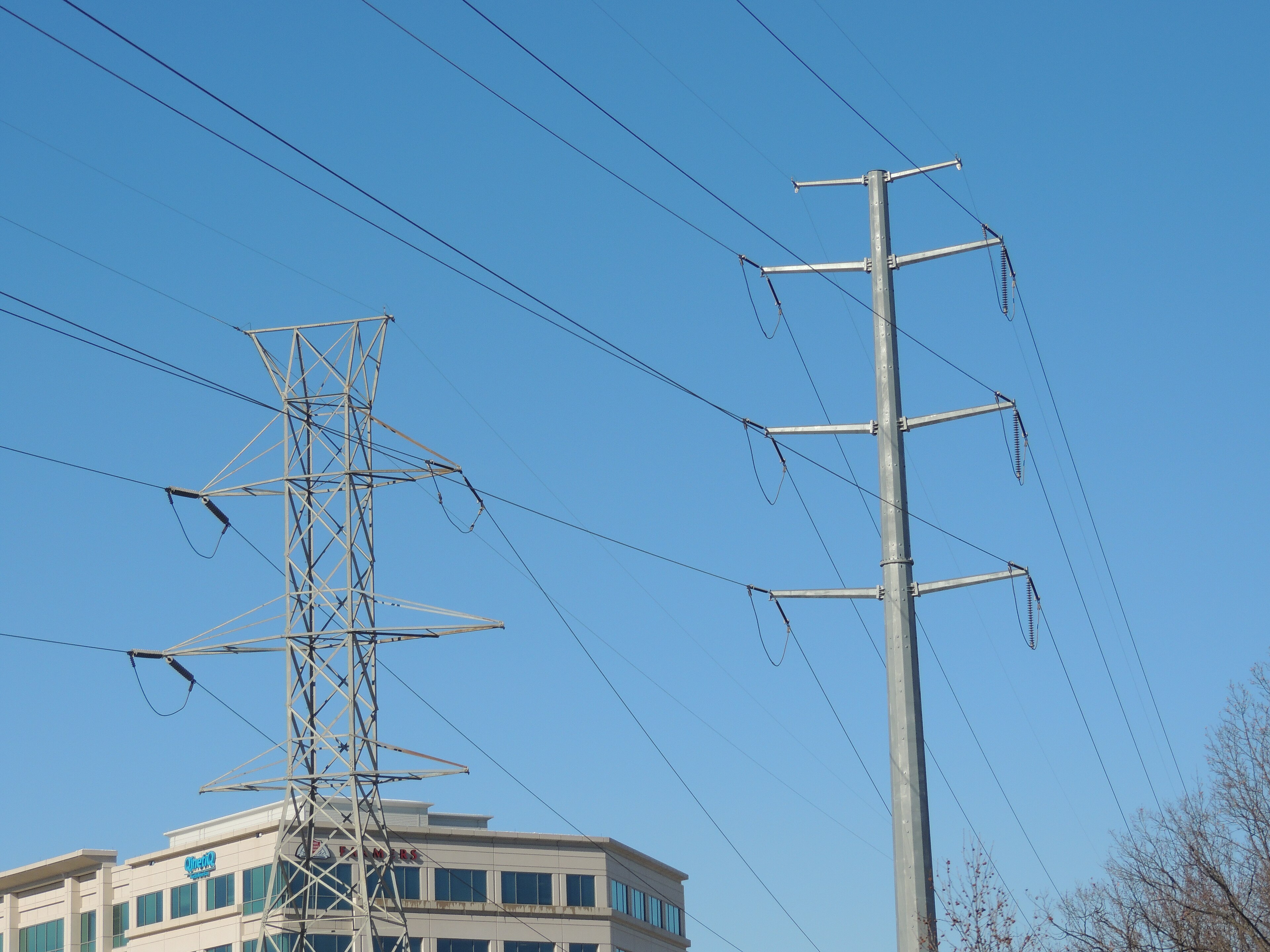
PJM Interconnection asked the Federal Energy Regulatory Commission on Nov. 16, 2026 to make large data centers stay connected to the grid through routine faults 1. Its filing creates a category called Large Computational Load, covering sites of 50 megawatts or more, and sets voltage and frequency ride-through standards from Jan. 16, 2027. Nearly 3.9 gigawatts of data center load left PJM's grid in one morning on July 22, and PJM serves around 10 gigawatts of such load today.
Ride-through means a facility keeps drawing grid power while a brief voltage or frequency swing passes. Carry one test through this piece: a megawatt counts as interconnected when it stays on the wires through a fault the grid cleared correctly.
What did PJM file on Nov. 16?
Two filings went to FERC that Monday. First came the ride-through rule for data centers 1. New large computational loads would have to show compliance as a condition of interconnection and operation. Existing ones get one year from the effective date, or one year from commercial operation, whichever is later. For a campus running today, that deadline is Jan. 16, 2028.
PJM's second filing, called Fast Energization, would cut the time to study new generation and transmission service for large loads from two years to one 2. It asks FERC for a 60-day comment period and an order within 120 days. So on one day PJM proposed to connect data centers twice as fast and to hold them on the grid once connected.
Why now? FERC issued a show-cause order on June 18, 2026 in Docket EL26-67-000, asking whether PJM's tariff adequately handles large loads, including ride-through performance during disturbances 4. An Aug. 14 order moved PJM's response date to Nov. 16, according to TechTimes, and a grid operator that files its own tariff proposal by that date suspends its duty to answer the order directly 8. PJM used the deadline to file a rule of its own.
Industry criteria vary, PJM Interconnection's filing says, yet they "reflect a common recognition that large computational facilities can present unique reliability considerations requiring enhanced planning, modeling and operational oversight" 1. The technical numbers come from the draft PJM showed its Planning Committee on Sept. 8 4. In that draft, a site may reduce power in proportion to a voltage sag and must return to more than 90 percent of its earlier draw within two seconds after voltage recovers. During frequency swings it holds its draw within 10 percent. PJM's Nov. 16 post gives the dates and the 50-megawatt line, and the tariff sheets will show whether each September number survived.
One routine fault moved 3.9 gigawatts in two waves
At 7:56 a.m. on July 22, a mechanical failure took a 230-kilovolt line out of service in Northern Virginia 3. Protection equipment cleared the fault as designed. Data centers in Dominion Energy's zone then switched to their own backup generators, 2,970 megawatts in a first wave. That loss of load pushed system voltage up, and a second wave of 1,099 megawatts followed, according to Brian Starling, who directs Dominion Energy's System Operations Center.
PJM's load fell from 99,984 megawatts to 96,205. Operators cut generation, and PJM brought its control error back inside its limit within nine minutes, against a 30-minute standard from the North American Electric Reliability Corporation, known as NERC.
Emanuel Bernabeu, who chairs PJM's Operating Committee, gave the operator's reading in PJM's Aug. 11 account of the committee's review. "They should not disconnect from the grid. These data centers are too sensitive to the kind of voltage that they like, and we feel they are disconnecting too early," Bernabeu said 3. Read his verbs. "Like" assigns the voltage preference to the customer, and "we feel" marks a judgment PJM had yet to write into a rule.
Size is the pattern. Similar transfers in Dominion's zone ran about 1,500 megawatts each on July 10, 2024 and Feb. 17, 2025, so July 22 was more than twice either one. Set beside the roughly 10 gigawatts of large computational load PJM serves, 3.9 gigawatts equals about 39 percent of that fleet, by this desk's arithmetic 1. PJM's post leaves open how much of the 3.9 came from sites above the 50-megawatt line.


Three load transfers in Dominion's zone against the 10 gigawatts PJM serves
ComparedThe case for the move: PJM reaches the fleet Texas exempted
Texas wrote its rule first. The Electric Reliability Council of Texas, ERCOT, won approval for its ride-through requirements from the Texas Public Utility Commission on July 9, 2026, and they took effect Aug. 1 5. PJM's own Sept. 8 slides describe the carve-out: ERCOT's voltage rules skip a site that was operational or approved to energize on or before Nov. 14, 2025 4.
Data center owners had asked for that kind of relief. In comments filed with ERCOT on Feb. 9, 2026, the Data Center Coalition wrote: "As the industry stands, some of the VRT regulations established in NOGRR282 are several years from being achievable" 7. VRT is voltage ride-through, and NOGRR282 is the Texas rule's number. The Data Center Coalition also asked ERCOT to limit the rule to loads still in the interconnection process, because "those sites were designed and investments were made and equipment purchased based on the requirements when the interconnection agreement was executed." Its argument concerns sunk design: a building bought to one standard is expensive to hold to another. Those words went to Texas nine months before PJM filed, and FERC's comment period will show whether the coalition repeats them.
PJM's filing takes the opposite course, and geography explains why. Texas could aim its rule at future sites. In Northern Virginia the sites that left the grid on July 22 are already built, so a rule for new arrivals alone would leave the measured problem in place. David Souder, PJM's executive director of system operations, said in August that "you really need these requirements in place before the load comes on the system" 3. For roughly 10 gigawatts, that moment has passed.
How long does a retrofit take? Shalin Savalia, a senior electrical engineer at Amazon Web Services, listed the work in POWER magazine on Aug. 10: sharing protection settings, installing fault recorders, and commissioning tests that swing voltage 10 percent each way 5. "Some of that is tuning, some is vendor firmware never designed to be adjusted this way, and some is a design change with a multi-year lead time," Savalia wrote. He added a harder sentence: "For a share of the installed base, the honest answer is that the capability is not there, and saying so in a data request is better than having it discovered in a planning study." Savalia supports ride-through rules, and his article, which states that its views are his own, urges data center owners to write their settings before a regulator does. His timeline still runs longer than PJM's one year for part of the fleet.
Four facts sit behind a step down. PJM Interconnection now says the transfers "posed serious threats to the reliability and safety of the grid" 1. The three events ran about 1,500, about 1,500 and nearly 3,900 megawatts. An existing campus faces its earliest binding date 14 months from now, and that date depends on a FERC order still to come. PJM forecasts additions of up to 30 gigawatts of this load by 2030.


From the Texas cut-off to PJM's deadline for running sites
TimelineThe data7 rows · sources
| Date | Event | Source |
|---|---|---|
| ERCOT's cut-off: sites operational by this date are exempt | [4] | |
| Data Center Coalition tells ERCOT some rules are years from achievable | [7] | |
| FERC issues its show-cause order to PJM | [4] | |
| Nearly 3.9 gigawatts leave PJM's grid on one fault | [1] | |
| PJM files its ride-through rule at FERC | [1] | |
| Proposed effective date for new sites | [1] | |
| Existing sites must comply, one year after the effective date | [1] |
PJM's committee chair against the Data Center Coalition on existing sites
Both sidesThe data2 rows · sources
| Side | Who | Claim | Source |
|---|---|---|---|
| For | Emanuel Bernabeu | These data centers are too sensitive to the kind of voltage that they like, and we feel they are disconnecting too early. | [3] |
| Against | Data Center Coalition | As the industry stands, some of the VRT regulations established in NOGRR282 are several years from being achievable. | [7] |
The case for a smaller step
Start with what held. PJM Interconnection rebalanced in nine minutes and said the grid "did not experience significant reliability impacts" 3. The data centers kept computing on their own generators, which is the job of backup power. Measured from inside the building, July 22 was a success.
The fix is also modest in kind. Elizabeth K. Whitney, managing principal at the energy-policy firm Meguire Whitney, told TechTarget in September that the rules could raise project costs through added equipment or software, and that she expects site selection and project timelines to stay largely unchanged 6. "Smart data center developers probably saw the writing on the wall that just having backup generation or on-site batteries for their own use wouldn't long be sufficient," Whitney said. Neil Osnato, founder of Persistence Analytics Group, put the test in one line: "It is whether the load will behave as the grid assumes once it's connected." His sentence concedes that the megawatts exist. Behavior is the open item, and relay settings change faster than substations get built.
Third, PJM filed a plan the same day that points the other way. Fast Energization would halve study time, and the ride-through numbers in PJM's September draft track the two-second recovery in the rule Texas approved in July 24. A developer who meets the Texas rule has a head start on PJM's.
Finally, a filing is a proposal. FERC must accept it before it binds anyone, as mgrid noted in September 9. That cuts both ways for sizing. The weakness is measured and the remedy is a plan, yet the remedy exists on paper with dates attached.
What is in force, and what PJM has only filed
The recordThe data6 rows · sources
| Column | Item | Source |
|---|---|---|
| On the record | PJM restored its control error within nine minutes on July 22 | [3] |
| On the record | ERCOT's ride-through rule took effect Aug. 1, 2026 | [5] |
| On the record | FERC ordered NERC to file first standards by Dec. 31, 2026 | [3] |
| Filed or expected | PJM's ride-through rule, filed Nov. 16 and awaiting a FERC order | [1] |
| Filed or expected | Fast Energization, filed Nov. 16 with an order requested within 120 days | [2] |
| Filed or expected | NERC ride-through thresholds, expected in 2027 | [3] |
Where this sits on the ledger
Energy asks whether the power is contracted, interconnected and generating. July 22 showed that 3.9 gigawatts of interconnected load can leave in minutes on a fault the grid handled correctly. Nov. 16 showed that PJM considers the gap serious enough to ask FERC for a mandate over running sites.
PJM's own posts and a filing FERC has yet to accept are reported evidence, and reported moves run from 0.3 to 0.8 points. This one takes the bottom of the band: PJM recovered in nine minutes, the rule is filed, and Fast Energization arrived the same day. Energy moves down 0.3 from a reading of 7.8.
PJM's ride-through filing lowers energy 0.3 points
The moveThe data5 rows · sources
| Measure | Value |
|---|---|
| Reading before this day | 7.5 |
| This piece's move | −0.3 (Energy, reported) |
| Band for reported evidence | 0.3 to 0.8 |
| Reading after the day (with 1 other piece that day) | 7.2 |
| Distance to 100 | 92.8 |
By the numbers
- Nearly 3.9 gigawatts of data center load moved to on-site generators on July 22, 2026, the largest such transfer in PJM's history 1
- 2,970 megawatts left in the first wave and 1,099 in the second 3
- Around 10 gigawatts of large computational load take service from PJM today, with additions of up to 30 gigawatts forecast by 2030 1
- Jan. 16, 2027 is the proposed effective date, and existing sites get one year more 1
- Two seconds is the window PJM's September draft allows for a site to recover 90 percent of its draw after a voltage sag 4
- Dominion Energy reports a 54.9-gigawatt data center pipeline, with about 12.0 gigawatts under electric service agreements 8
- July 9, 2026 is the day Texas regulators approved ERCOT's ride-through rule, effective Aug. 1 5
- Fast Energization would cut PJM's study timeline from two years to one 2
What to watch
FERC's order on the ride-through filing is the first signal. Acceptance with the one-year clock for existing sites intact would give the fix a date and reverse part of this move 1. Comments from the Data Center Coalition and from operators in Dominion's zone will show whether owners seek the Texas exemption at FERC 7. NERC owes FERC its first standards for computational loads by Dec. 31, 2026, with ride-through thresholds expected in 2027 3. A fourth transfer before January 2028 would deepen the move, and a fleet that holds through a comparable fault would shrink it. Until one of those arrives, count a data center megawatt in PJM as interconnected on the condition that the voltage stays steady.
Sources
- 1PJM Proposes New Rules to Protect Grid Reliability as Data Center Demand Grows, PJM Interconnection, PJM Inside Lines, Nov. 16, 2026
- 2PJM Plan Would Cut Interconnection Process Time in Half, PJM Interconnection, PJM Inside Lines, Nov. 16, 2026
- 3PJM, Dominion Review Large Load Transfer Event, PJM Interconnection, PJM Inside Lines, Aug. 11, 2026
- 4PJM LCL Ride-through Requirements: PJM Interconnection Proposal, PJM Interconnection, David Egan and Byoungkon Choi, Sept. 8, 2026
- 53 GW Off PJM, Again: What NERC's 2024 Investigation Already Told Us, POWER, Shalin Savalia, Aug. 10, 2026
- 6PJM proposes ride-through rules for large data center loads, TechTarget, Shane Snider, Sept. 15, 2026
- 7Data Center Coalition Comments on NOGRR 282, Large Electronic Load Ride-Through Requirements, Data Center Coalition (via ERCOT), Cameron Poursoltan, Feb. 9, 2026
- 8Latitude Finds Data Center Power Contracts Cover 22% of Reported Load as Utilities Seek Power Plants, TechTimes, William Chan, Nov. 16, 2026
- 9PJM Will File Its Own Data Center Ride-Through Rule in November, Before NERC Sets Thresholds, mgrid, Sept. 10, 2026