Oracle Ties $20 Billion to OpenAI in a Statement While Its Filings Say General Corporate Purposes
Oracle says a $20 billion November raise and vendor financing fully fund its OpenAI contract, while its SEC filings leave OpenAI unnamed and S&P's Mark Habib warns of debt that goes unreported.
By Ryan Elliott Dennis · 13 sources · 9 min read
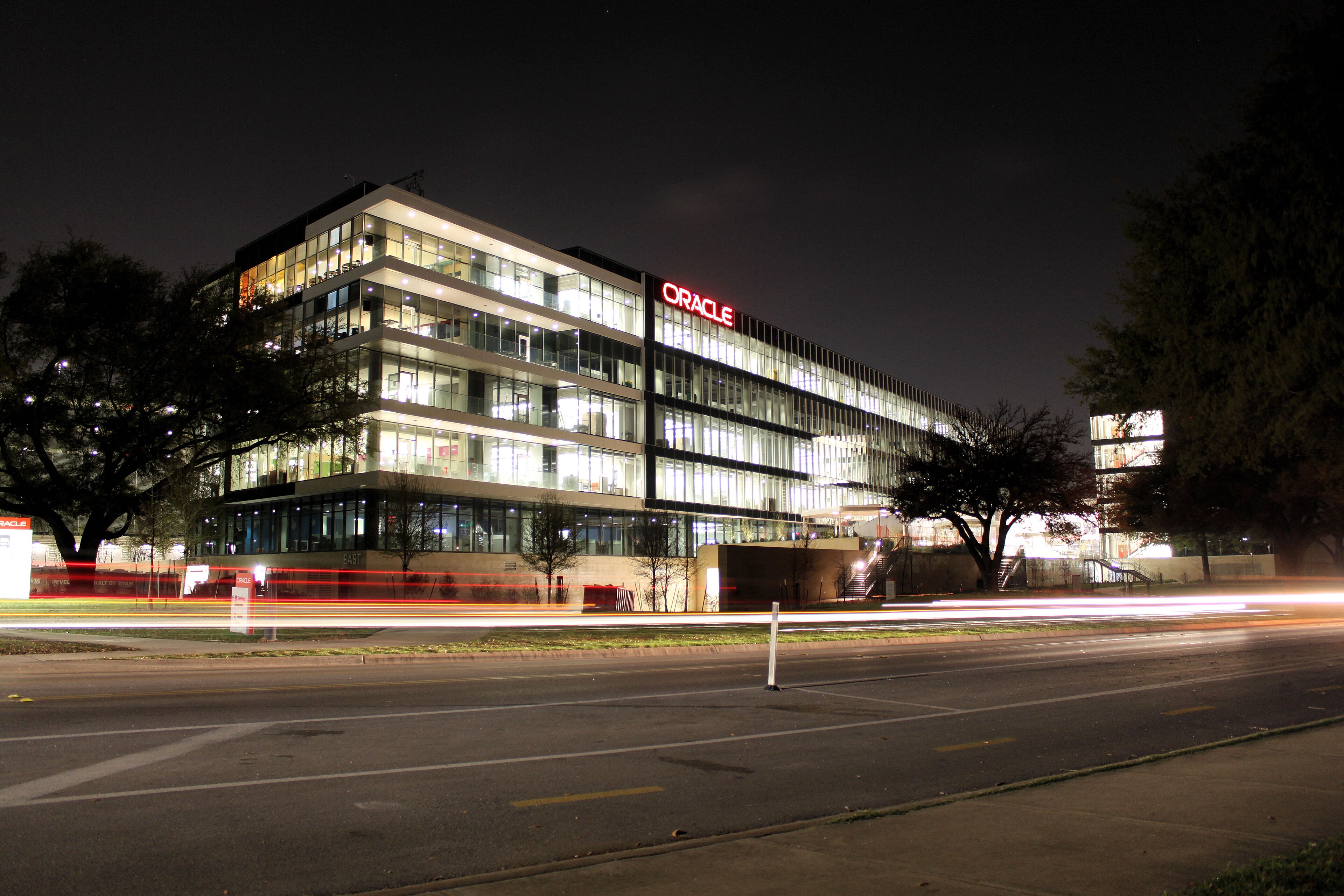
Oracle said on Nov. 20, 2026, that it has secured all the money it needs to fulfill its contract with OpenAI 1. The statement credits a "final capital raise earlier this month," which Reuters identifies as $20 billion, about half in stock and half in debt 2. Oracle's Form 8-K confirms that both sales closed on Nov. 4, and it assigns the proceeds to "general corporate purposes" 3. Across the six Oracle filings and exhibits read for this piece, the name OpenAI appears zero times.
Why should a reader care where a sentence sits? A securities filing carries legal liability, a closing date and a dollar figure, while a newsroom post carries only Oracle's word. So this analysis sorts each funding claim into one of three bins: on file with an amount, on Oracle's word with an amount, or on Oracle's word alone. For the AI capital behind OpenAI's compute, those three bins hold very different sums.
Oracle's funding statement moves capital up 0.3 points
The moveThe data5 rows · sources
| Measure | Value |
|---|---|
| Reading before this day | 9.1 |
| This piece's move | +0.3 (Capital, reported) |
| Band for reported evidence | 0.3 to 0.8 |
| Reading after the day (with 1 other piece that day) | 9.4 |
| Distance to 100 | 90.6 |
What did Oracle claim on Nov. 20?
Oracle published three paragraphs from Austin, Texas, and Reuters quotes the same sentences from a company post on X 2. "Oracle has secured all the funding we need to fulfill our contract with OpenAI. With our final capital raise earlier this month, we became the first hyperscaler fully funded for this investment cycle," Oracle wrote 1. Then came the part about suppliers: "The financing we outlined at Oracle Investor Day, including vendor financing, is in place. Any further private discussions with vendors are just additional options."
Consider the two sentences that close that paragraph. "Our ability to deliver on our OpenAI contract does not depend on those discussions. Any media reports that will come out and say the contrary are incorrect and wrong," Oracle wrote. The verb is "will come out," which means Oracle rejected unfavorable reports before any had appeared, and the phrase "further private discussions" concedes that negotiations with vendors continue.
Harshita Mary Varghese of Reuters reported that Oracle shares rose as much as 3.3 percent in after-hours trading 2. Her report adds a figure the statement omits: Oracle and OpenAI plan 4.5 gigawatts of additional data center capacity in the United States, on top of the first Stargate site in Abilene, Texas. That planned capacity equals 45 percent of the ten gigawatts this ledger's definition of superintelligence requires. Oracle's statement supplies the building news: "Our Abilene campus, where Astra-6 was trained, is nearly complete. Shackelford, our next gigawatt-scale campus, is fully permitted."

What do Oracle's filings show about the $20 billion?
Start with the stock. Oracle sold 86,206,897 shares at $116.00 each, which produced $10,000,000,052 before underwriting fees and approximately $9.9 billion after them 5. The last reported trade before the offering, on Oct. 30, was $130.67, so the new buyers paid about 11 percent less, by this desk's arithmetic. Alina Maria Stan of The Next Web reported that the shares fell 8.6 percent on Nov. 2, the day Oracle marketed both offerings 11.
Debt came in five tranches totaling $10 billion. The pricing term sheet lists coupons from 7.000 percent on notes due 2029 to 8.650 percent on notes due 2046, at spreads of 240 to 335 basis points above comparable Treasuries, where a basis point is one hundredth of a percentage point 4. Interest on the five tranches comes to about $777 million a year, by this desk's arithmetic. Expected ratings on the term sheet were Baa2 with a negative outlook at Moody's, BBB- at S&P and BBB at Fitch, and BofA Securities led both offerings.
Kimberly Woolley, a senior vice president and assistant general counsel at Oracle, signed the Form 8-K on Nov. 4, and the document carries one sentence on where the money goes. "The net proceeds of the Offerings will be used for general corporate purposes, which may include capital expenditures, repayment of indebtedness, future investments or acquisitions and payment of cash dividends on or repurchases of Common Stock," Oracle wrote 3. Dividends and buybacks sit on that list beside capital expenditures.

What Oracle filed with the SEC, and what Oracle said on Nov. 20
The recordThe data10 rows · sources
| Column | Item | Source |
|---|---|---|
| On file with the SEC | 86,206,897 shares sold at $116.00, closed Nov. 4 | [3] [5] |
| On file with the SEC | $10 billion of notes in five tranches, closed Nov. 4 | [3] |
| On file with the SEC | Coupons run from 7.000 percent to 8.650 percent | [4] |
| On file with the SEC | Proceeds go to general corporate purposes | [3] |
| On file with the SEC | Total debt rises from $125.3 billion to $135.3 billion | [6] |
| On Oracle's word | All funding for the OpenAI contract is secured | [1] |
| On Oracle's word | Vendor financing is in place, amount unstated | [1] |
| On Oracle's word | Abilene campus is nearly complete | [1] |
| On Oracle's word | Shackelford campus is fully permitted | [1] |
| On Oracle's word | Vera Rubin rack handover is on track for the coming weeks | [1] |
Why does a closed $20 billion move the capital reading up?
The ledger's capital question asks whether committed, closed financing is paying for the buildout, or only announced financing. Closed financing is exactly what the 8-K documents, because both offerings settled on Nov. 4, two days after pricing 3.
Hilary Maxson, Oracle's chief financial officer, presented the financing plan at the company's investor day in Las Vegas on Oct. 28. "We're announcing that this $20 billion, split evenly between debt and equity, is the final amount needed to fund the remainder of this cycle," Maxson said 8. Oracle's release that day promised to limit new capital-market funding to $20 billion through fiscal 2030, on top of $20 billion of stock sold in the quarter ended Aug. 31 7.
Seven days later the money had arrived. That speed is evidence for Maxson's side, because a financing plan described to investors on a Wednesday became settled cash by the following Wednesday. Oracle's net proceeds from stock and notes since June 1 come to about $39.8 billion, by this desk's arithmetic 5610.
Jacob Bourne, an analyst at Emarketer, gave the plan a measured endorsement on the day Maxson spoke. "Though the projections are ambitious and far from guaranteed, they demonstrate an understanding of investors' concerns and offer an optimistic path toward addressing them," Bourne said, in a Reuters report 8. Oracle shares rose more than 12 percent that day.
Oracle turned an Oct. 28 funding plan into closed cash in seven days
TimelineThe data5 rows · sources
What does vendor financing leave off the page?
Vendor financing means that a supplier of chips, servers or buildings lends the buyer the purchase price or accepts payment later. Oracle's statement says this financing "is in place" and omits the amount 1. In the offering documents, written 18 days earlier, the tense is different. "In addition, we expect to incur additional borrowings or other liabilities under vendor financing, leases and other financing arrangements," Oracle wrote in both prospectus supplements 56.
Oracle itself counts vendor financing as debt. A footnote in the investor day release reads: "Net debt includes borrowings, vendor financing, and operating and finance lease liabilities, less cash and marketable securities" 7. So the statement's phrase "fully funded" includes money that Oracle's own definition treats as borrowing, and that borrowing has yet to appear with a dollar figure in any filing this desk examined.
Mark Habib, global head for digital infrastructure at S&P Global, described the blind spot at a roundtable in London on Oct. 19. "It is safe to assume that there is more (debt) out there that we are not seeing," Habib said, according to Reuters 9. He added: "If it's not reported, then it's not part of the disclosure by the hyperscalers. Also, if we are not rating the transactions where this liability may accrue, then the fact of the matter is that we might not have the visibility."
Habib was describing the six largest American hyperscalers, Oracle among them, a month before Oracle's statement, and he left every rating unchanged. "For now, we don't have the view that there is a major disconnect that needs to force our ratings to change at this point," he said. S&P had cut Oracle in July to BBB-, the lowest investment-grade rating.
Oracle's quarterly report shows how large the unrecorded part can be. On Aug. 31, the company had $288 billion of additional lease commitments, substantially all for data centers, that sat off its balance sheet because the leases had yet to begin 10. A search of that report for the word "vendor" returns zero results. Michael Elias, an analyst at TD Cowen, wrote on Oct. 20 that Nvidia may be giving Oracle credit support on its data center leases, a view that both companies have left unconfirmed, according to 24/7 Wall St. 13.
Why is the step 0.3, at the bottom of the reported band?
Oracle's own announcement earns 0.3 to 0.8 points under this ledger's method, and four facts hold this step at the low end.
First, the news of Nov. 20 is a statement: the closed $20 billion is on file with the SEC, and the sentence connecting that money to OpenAI appears only in Oracle's post 13.
Second, the sum is small beside the spending. Oracle's capital expenditures reached $28.5 billion in the quarter ended Aug. 31 alone, so the entire November raise covers about 70 percent of one comparable quarter 10. Free cash flow for those three months was negative $5.4 billion.
Third, the money was expensive. Total debt on the capitalization table rises from $125.3 billion to $135.3 billion with the new notes, and the 2046 tranche pays 8.650 percent 64. Kevin Koharki, an associate professor of accounting at Purdue University, read S&P's forecasts in September and doubted the rating. "Given the current level of uncertainty regarding the ability of AI companies to generate meaningful ROI, S&P's limited confidence to forecast Oracle's financial performance past 2027, and Oracle's weakening financial performance and uncertain path to profitability, one must wonder how Oracle deserves an investment-grade credit rating," Koharki wrote in Fortune 12.
Fourth, capital weighs 0.05 in the reading, and the statement covers only Oracle's side of the contract. Reuters calls OpenAI a loss-making customer on which Oracle "relies heavily" 8. Whether OpenAI can pay for 4.5 gigawatts of capacity is a separate question, and Oracle's three paragraphs leave that question open.
Oracle's $20 billion raise beside its spending, debt and leases
ComparedWhat would each side need to be true?
Maxson's case requires three outcomes: free cash flow turning positive in the second half of fiscal 2028, vendor terms that hold until then, and zero additional stock or bond offerings in the meantime. Habib's case requires a quarter in which leases, guarantees or supplier loans surface in a filing at a size the Nov. 20 statement left out.
The verdict is to count the $20 billion as closed capital and to treat "fully funded" as Oracle's claim. A reader tracking AI capital should open Oracle's next quarterly report, covering the period ending Nov. 30, and look for two lines: a dollar figure for vendor financing, and the lease commitments that stood at $288 billion in August. Until those lines print, the filings support a narrower sentence than the one Oracle posted.
Oracle's Hilary Maxson says final amount; S&P's Mark Habib says unseen debt
Both sidesBy the numbers
- $20 billion: stock and notes Oracle closed on Nov. 4, split evenly 3.
- 86,206,897 shares sold at $116.00, about 11 percent under the Oct. 30 close of $130.67 5.
- Coupons on the five note tranches run from 7.000 percent to 8.650 percent 4.
- About $777 million: yearly interest on the new notes, by this desk's arithmetic 4.
- Total debt reaches $135.3 billion after the notes, up from $125.3 billion on Aug. 31 6.
- $288 billion: lease commitments off Oracle's balance sheet on Aug. 31 10.
- Capital expenditures hit $28.5 billion in the quarter ended Aug. 31 10.
- 4.5 gigawatts: capacity Oracle and OpenAI plan beyond Abilene, Reuters reports 2.
What to watch
Oracle's quarterly report for the period ending Nov. 30 would confirm this step if it prints a vendor financing balance and Oracle reports the Vera Rubin racks handed over at Shackelford 1. Another stock or bond offering before fiscal 2029 would reverse it, since Oracle's investor day release capped new capital-market funding at $20 billion 7. Downgrades would argue for a down step: S&P rates the notes BBB-, and Moody's holds a negative outlook 4.
Sources
- 1Oracle Statement, Oracle, Nov. 20, 2026
- 2Oracle says OpenAI infrastructure deal is fully funded after final capital raise, Reuters (via The Star), Harshita Mary Varghese, Nov. 20, 2026
- 3Oracle Corporation, Form 8-K, date of report November 2, 2026, SEC EDGAR, Oracle Corporation, Nov. 4, 2026
- 4Oracle Corporation, issuer free writing prospectus dated November 2, 2026 (final pricing term sheet), SEC EDGAR, Oracle Corporation, Nov. 2, 2026
- 5Oracle Corporation, prospectus supplement filed under Rule 424(b)(5), 86,206,897 shares of common stock, SEC EDGAR, Oracle Corporation, Nov. 4, 2026
- 6Oracle Corporation, prospectus supplement filed under Rule 424(b)(2), $10,000,000,000 of senior notes, SEC EDGAR, Oracle Corporation, Nov. 4, 2026
- 7Oracle Investor Day 2026: Accelerating Value Creation (Exhibit 99.1 to Form 8-K), SEC EDGAR, Oracle Corporation, Oct. 28, 2026
- 8Oracle eases AI spending worries with plan to turn cash flow positive, Reuters (via WHTC), Aditya Soni and Anzar Mehraj, Oct. 28, 2026
- 9Top hyperscalers likely to have more AI-linked debt than now known, S&P Global warns, Reuters (via KFGO), Marc Jones, Oct. 19, 2026
- 10Oracle Corporation, Form 10-Q for the quarter ended August 31, 2026, SEC EDGAR, Oracle Corporation, Sept. 11, 2026
- 11Oracle pays up to 8.65% as $20B debt and equity raise prices, The Next Web, Alina Maria Stan, Nov. 2, 2026
- 12S&P kept Oracle investment grade. Its own numbers don't support that call., Fortune, Kevin Koharki, Sept. 18, 2026
- 13TD Cowen Thinks Nvidia Is Helping Oracle Get Its Data Centers Financed, 24/7 Wall St., Omor Ibne Ehsan, Oct. 21, 2026