Moonshot AI Cancels a $150 Million Nvidia Chip Rental After Agreeing to Pay Half Upfront
Moonshot AI walked away from a $150 million contract for Nvidia B300 chips in Indonesia after Commerce's Nov. 16 rule, The Information reported on Nov. 19, and two relays say the Kimi developer halted other talks.
By Ryan Elliott Dennis · 14 sources · 9 min read
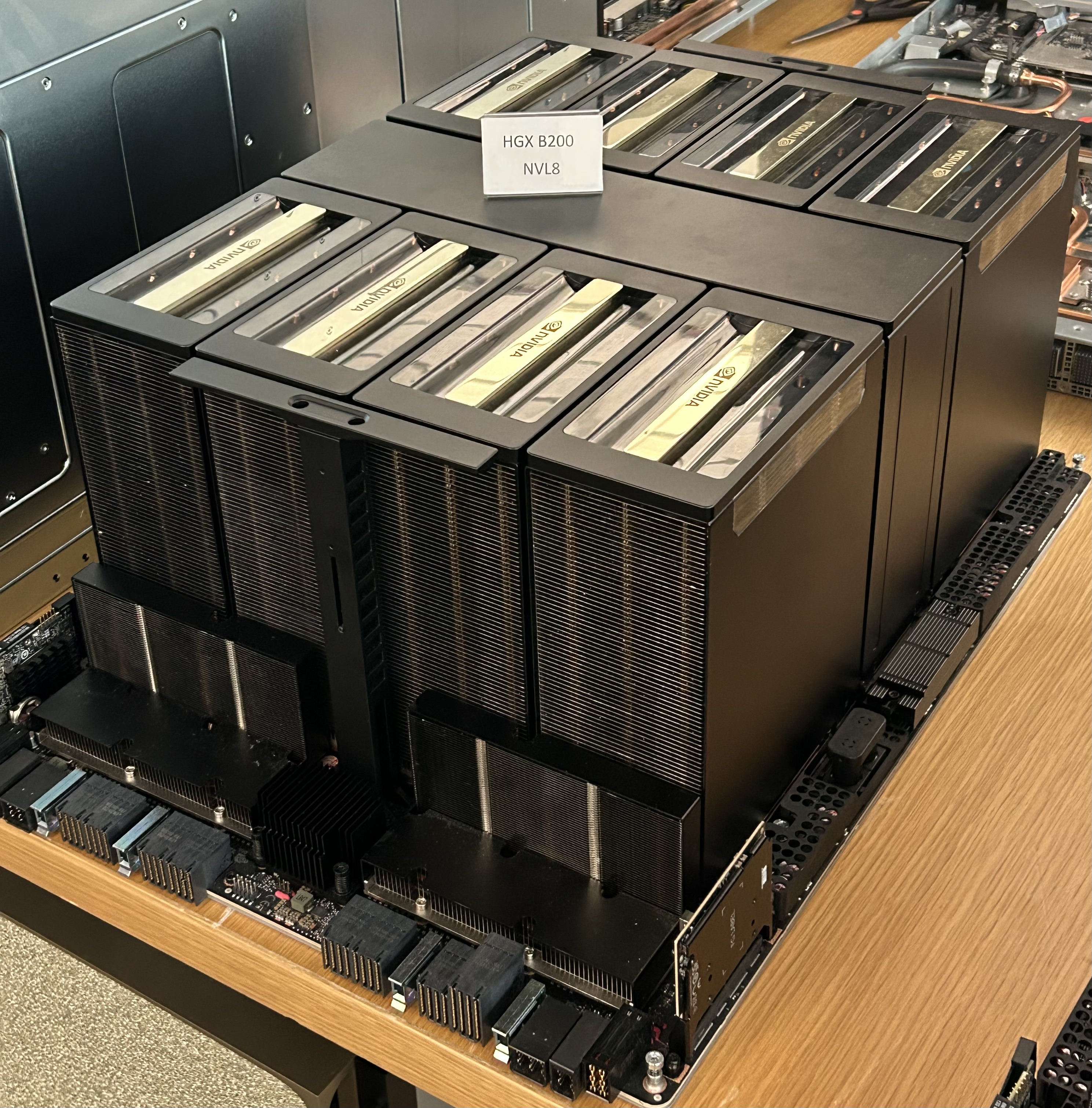
Moonshot AI, the Beijing developer of the Kimi models, walked away from a $150 million contract to rent Nvidia Blackwell Ultra B300 chips through a data center in Indonesia, The Information reported on Nov. 19, 2026, as relayed by The Jakarta Post 1. Its terms had Moonshot paying about 50 percent upfront, where a typical contract asks for around 15 percent. The Information's report came three days after the U.S. Commerce Department released its rule on chips rented abroad 8.
How much of this sits on the record? The Information's page shows a headline and two bylines, Claudia Chong and Qianer Liu, above a paywall 2. This desk read the report through three relays that carry a reporter's or a paper's name: The Jakarta Post, Seoul Economic Daily and Hong Kong Economic Times 34. "Moonshot, Nvidia and the host have not confirmed any of it," wrote Yash Thakker of explainx.ai 11. Every detail below about the contract is The Information's reporting, credited to two people with direct knowledge of the deal.
Moonshot AI's cancelled $150 million chip rental moves compute down 0.2 points
The moveThe data5 rows · sources
| Measure | Value |
|---|---|
| Reading before this day | 8.6 |
| This piece's move | −0.2 (Compute, reported) |
| Band for reported evidence | 0.3 to 0.8 |
| Reading after the day (with 2 other pieces that day) | 8.6 |
| Distance to 100 | 91.4 |
What did Moonshot AI cancel?
Moonshot had signed with a Southeast Asian neocloud, a firm whose main business is renting out GPU capacity, for access to a cluster of B300 chips, Maudey Khalisha wrote in The Jakarta Post 1. Operations were expected to begin as early as next year. Washington bars the B300 from sale to China, so renting it abroad was the route left open. Every relay this desk opened leaves the host unnamed and the chip count unstated.
Consider the deposit. Seoul Economic Daily's Park Si-jin described the 50 percent prepayment as more than triple the customary 15 percent 3. By desk arithmetic, half of $150 million is $75 million, against $22.5 million at the usual rate. Whether any of that money changed hands goes unreported.
Hong Kong Economic Times added the purpose. Moonshot wanted the chips for Kimi K4, its next model, and the Bureau of Industry and Security (BIS) had opened a formal investigation into how the lab obtained advanced chips after Kimi K3 4. Another source, the paper wrote, said Moonshot suspended negotiations on other new agreements while it assesses the rule. Park's account says the same: the lab "halted talks on new agreements" 3.
One sentence in The Jakarta Post looks past Moonshot to other tenants. "The cancellation of Moonshot's Indonesian deal could signal further cancellations, particularly for projects still under construction," The Jakarta Post wrote 1.
Moonshot agreed to pay about 50 percent upfront; a typical contract asks 15
ComparedWhat stopped a deal Moonshot had agreed to prepay?
A license did. Commerce's rule requires one before controlled chips reach any data center abroad that supplies more than 12,000,000 TPP to companies headquartered in China, and it adds a license requirement for chips bound for Indonesia and four other countries 8. TPP, total processing performance, is the export rules' measure of a chip's power. The law firm Ashurst Perkins Coie converts the line to roughly 750 Nvidia H100 chips or roughly 330 B200 chips 7. "This represents a small fraction of a single large training cluster," Ashurst Perkins Coie wrote.
Read the contract against those two tests. An Indonesian host renting a B300 cluster to a Beijing lab meets the country test by its address and the tenant test by its customer. Moonshot's deposit went to the neocloud. Permission comes from Washington, and a larger deposit leaves that decision unchanged.
Neil Shah, vice president of research at Counterpoint, stated the case that the rule bites. "Losing remote access creates a severe short-term compute bottleneck for Chinese tech giants, but it is a massive long-term catalyst for decoupling," Shah said in a Reuters report published Nov. 17 5. Charu Chanana, chief investment strategist at Saxo in Singapore, described both ends of the contract. "For overseas data-center operators reliant on Chinese customers, this could mean weaker utilisation, pricing pressure and delayed expansion. Chinese AI developers, meanwhile, could face rising costs and slower development timelines," Chanana said.
Shah's sentence carries two clocks. Its first half describes Moonshot's week: capacity for K4 that will go unserved. The second half describes a slower shift toward Chinese chips, which the rule speeds up.
Moonshot was already under watch. Michael Kratsios, director of the White House Office of Science and Technology Policy, wrote in a social media post on July 22 that the company "acquired GB300-equipped servers and has accessed GB300s in Thailand, likely to train its AI models," Bloomberg Government reported 9. His word "likely" marks an official's inference. Thakker's timeline adds a CNBC report of Nov. 5 that Moonshot discussed renting Blackwell clusters of 8,000 or more GPUs from European neoclouds; one source said it proposed paying 30 to 50 percent more upfront than a customer from outside China 11. In both reports, the lab answered scarce supply with a bigger deposit.


Three days separate Commerce's rule from the report of Moonshot's cancellation
TimelineDid Moonshot already sign a replacement?
AI Weekly, an aggregator, says yes. "Moonshot has reportedly already signed a replacement contract with another Southeast Asian cloud provider, with B300 services expected to begin next year," AI Weekly wrote on Nov. 19, linking only to The Information 10.
Set that sentence beside the bylined relays. Khalisha's account, Park's and Hong Kong Economic Times's all omit a replacement 1. Two of the three report the reverse, a pause in new talks 34. AI Weekly's replacement also shares three features with the cancelled deal as The Jakarta Post describes it: a Southeast Asian cloud provider, B300 chips and service next year.
This desk's inference, labelled as one: the replacement may be the cancelled contract described a second time. The Information's full text would settle the point, and it sits behind the paywall 2. Until a bylined report names a provider, the ledger leaves the replacement out of the move.
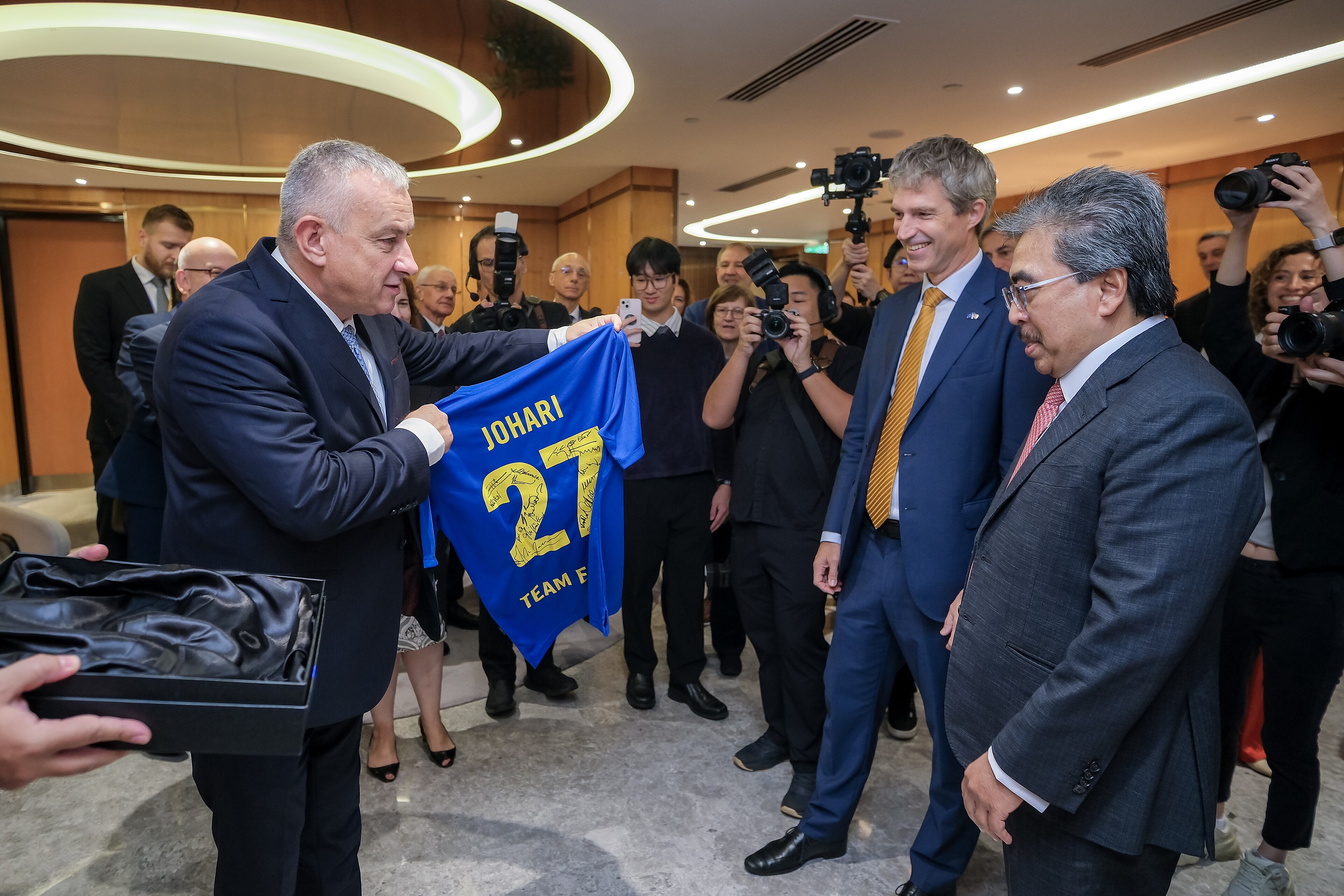
A second Southeast Asian host would also face the same license. Malaysia's investment, trade and industry minister, Johari Abdul Ghani, addressed the operators in his country on Nov. 18. "My advice to all data centre operators in Malaysia is, if you want to continue conducting your business here, you must comply with US rules and regulations. If you are not prepared to comply, then you should not operate in Malaysia," Johari said in Shenzhen, Bernama reported 12.

What the bylined relays of The Information carry, and what one aggregator adds
The recordThe data7 rows · sources
| Column | Item | Source |
|---|---|---|
| In bylined relays | Moonshot cancelled a $150 million B300 rental in Indonesia | [1] |
| In bylined relays | Moonshot agreed to pay about 50 percent upfront against a typical 15 | [1] |
| In bylined relays | Moonshot halted talks on new agreements | [3] |
| In bylined relays | The chips were meant for Kimi K4 | [4] |
| Claimed or open | A replacement contract with another Southeast Asian provider, per AI Weekly | [10] |
| Claimed or open | The host's name and the chip count | [11] |
| Claimed or open | Any statement from Moonshot, Nvidia or the host | [11] |
Why is the step 0.2, smaller than a cancelled contract looks?
Start with the strongest objection. Kate Koren and Kevin Kurland of the Center for Strategic and International Studies (CSIS) expect the rule to slow Chinese model development "at least in the short term," and then they qualify it 6. "However, procurement networks, especially those funded by state actors, will reroute. Continued diligence and willingness to impose controls on new hot spots—and flexibility to remove countries that take appropriate measures to prevent diversion—will be necessary to maintain effectiveness," Koren and Kurland wrote.
Where could Moonshot reroute? Ashurst names one address. "Because the rule regulates exports, not cloud services, it does not reach U.S. data centers," Ashurst Perkins Coie wrote 7. Closing that gap would take the Remote Access Security Act, which the House passed 369 to 22 on Jan. 12 and which waits in the Senate Banking Committee.
Commerce's own forecast is modest too. "BIS expects an annual increase of approximately 100 licenses," the U.S. Commerce Department wrote in the rule's paperwork estimate 8. Each license is reviewed case by case, so a licensed host could still serve a Chinese tenant.
Domestic chips are the slower route. Alibaba said on its Nov. 19 earnings call that its next Qwen model is being trained on in-house chips, and chief executive Wu Yongming outlined three generations of processors from its T-Head unit, Global Times reported 14.
Newsquawk, a market news service, supplied a frame worth keeping. "The distinction worth drawing is between a single collapsed deal, which is noise, and evidence of systematic chilling of the workaround channel," Newsquawk wrote 13.
Four facts hold the step at 0.2, below the reported band of 0.3 to 0.8. First, the record shows one contract, worth $150 million, with its chip count unreported 1. Second, service was due next year at the earliest, so the cancellation removes planned capacity and leaves running clusters untouched. Third, the loss falls on one tenant: B300 chips stay available to buyers outside China, and Chanana's forecast for the hosts is weaker utilisation and pricing pressure 5. Fourth, the report rests on two unnamed people, and Moonshot, Nvidia and the host have stayed silent 11.


Commerce expects its rule to add about 100 licenses a year
The numberThe data1 row · sources
| Measure | Value | Source |
|---|---|---|
| Added licenses Commerce expects each year under the Nov. 16 rule | 100 licenses a year | [8] |
What would each side need to be true?
Shah's reading holds if other Chinese labs cancel, license applications for Chinese tenants are denied, and K4 slips. Koren and Kurland's holds if Moonshot's capacity reappears in Europe, in a U.S. data center or on Chinese chips within months.
The verdict for now favors Shah on the week and leaves the year open. Moonshot agreed to pay about half of $150 million upfront, lost the capacity anyway, and paused its other talks. For a neocloud in the five named countries, a Chinese tenant's deposit has stopped securing a contract: ask for the license answer before taking the prepayment. Readers should count cancellations by named contracts and treat the replacement as unconfirmed.
Counterpoint's Neil Shah sees a bottleneck; Kate Koren of CSIS expects rerouting
Both sidesThe data2 rows · sources
| Side | Who | Claim | Source |
|---|---|---|---|
| For | Neil Shah | Losing remote access creates a severe short-term compute bottleneck for Chinese tech giants and a massive long-term catalyst for decoupling. | [5] |
| Against | Kate Koren | Procurement networks, especially those funded by state actors, will reroute, so continued diligence on new hot spots will be necessary. | [6] |
By the numbers
- $150 million: the rental contract Moonshot AI cancelled, by The Information's reporting as relayed 1.
- About 50 percent upfront, against a typical 15 percent, is the deposit Moonshot had agreed to pay 1.
- Three days separate Commerce's Nov. 16 rule from the Nov. 19 report 8.
- 12,000,000 TPP: the compute supplied to Chinese-headquartered companies above which a data center abroad needs a license 8.
- Roughly 330 B200 chips, or 750 H100 chips, equal that line by Ashurst Perkins Coie's count 7.
- 8,000 or more GPUs: the European clusters Moonshot discussed renting, per CNBC's Nov. 5 report as summarized by explainx.ai 11.
- Approximately 100 added licenses a year is Commerce's own forecast for the rule 8.
- 369 to 22: the House vote for the Remote Access Security Act, which would reach U.S. data centers 7.
What to watch
A statement from Moonshot, Nvidia or the Indonesian host would lift the cancellation from reported toward confirmed 11. Bylined reporting that names a replacement provider would argue for reversing part of this move, and a second Chinese lab's cancellation would deepen it 1. Commerce's first license decision for a Southeast Asian host with a Chinese tenant, due inside the 90-day window, would show whether the 100-license forecast means open or shut 8. Kimi K4's release date will say what the lost capacity cost.
Sources
- 1Chinese AI firm Moonshot reportedly scraps $150m chip deal in Indonesia, The Jakarta Post, Maudey Khalisha, Nov. 20, 2026
- 2China's Moonshot AI Scraps $150 Million Deal to Access Nvidia Chips in Indonesia, The Information, Claudia Chong and Qianer Liu, Nov. 19, 2026
- 3Moonshot AI Scraps Nvidia Chip Deal Despite 50% Prepayment Offer, Seoul Economic Daily, Park Si-jin, Nov. 21, 2026
- 4The US Tightens Controls on Overseas Computing Power, Kimi Developers Cancel Blackwell Chip Leasing Agreement in Indonesia, Hong Kong Economic Times (via AiCoin), Hong Kong Economic Times, Nov. 19, 2026
- 5US AI chip curbs threaten Southeast Asia data center boom, shares slump, Reuters (via The Standard), Reuters, Nov. 17, 2026
- 6New Export Controls on Remote Access: The Implications for Industry and Competition with China, Center for Strategic and International Studies, Kate Koren and Kevin Kurland, Nov. 18, 2026
- 7BIS issues Interim Final Rule restricting remote access to advanced US AI chips, Ashurst Perkins Coie, Andrew Caridas, Michael Herrera and Mason Ji, Nov. 17, 2026
- 8Addressing Remote Access to Advanced Semiconductors (RIN 0694-AK50), interim final rule, U.S. Commerce Department, U.S. Department of Commerce, Nov. 16, 2026
- 9US Official Says Moonshot Accessed Banned Nvidia Chips (2), Bloomberg Government, Maggie Eastland, July 23, 2026
- 10Moonshot AI Cancels $150M Nvidia B300 Rental in Indonesia, AI Weekly, Nov. 19, 2026
- 11Moonshot AI Scraps $150M Nvidia B300 Deal in Indonesia: What Is Reported vs Confirmed, explainx.ai, Yash Thakker, Nov. 19, 2026
- 12Malaysia seeks US clarification on AI chip restrictions, investigates alleged re-exports, Bernama (via The Star), Bernama, Nov. 18, 2026
- 13China's Moonshot AI has reportedly scrapped its USD 150mln deal to rent access to NVIDIA's (NVDA) Blackwell Ultra B300 chips through an Indonesian data centre, The Information reports citing sources, Newsquawk, Nov. 19, 2026
- 14Alibaba says next-gen Qwen trained on in-house chips amid intensive roll-out of Chinese AI models, Global Times, Nov. 19, 2026