ASML Tells Investors Its 2027 and 2028 Chip-Tool Supply Will Fall Short of Demand
ASML reported record Q3 sales of 11.7 billion euros on Oct. 14 and CEO Christophe Fouquet said planned capacity for 2027 and 2028 will miss customer demand; compute moves up 0.5.
By Ryan Elliott Dennis · 7 sources · 7 min read
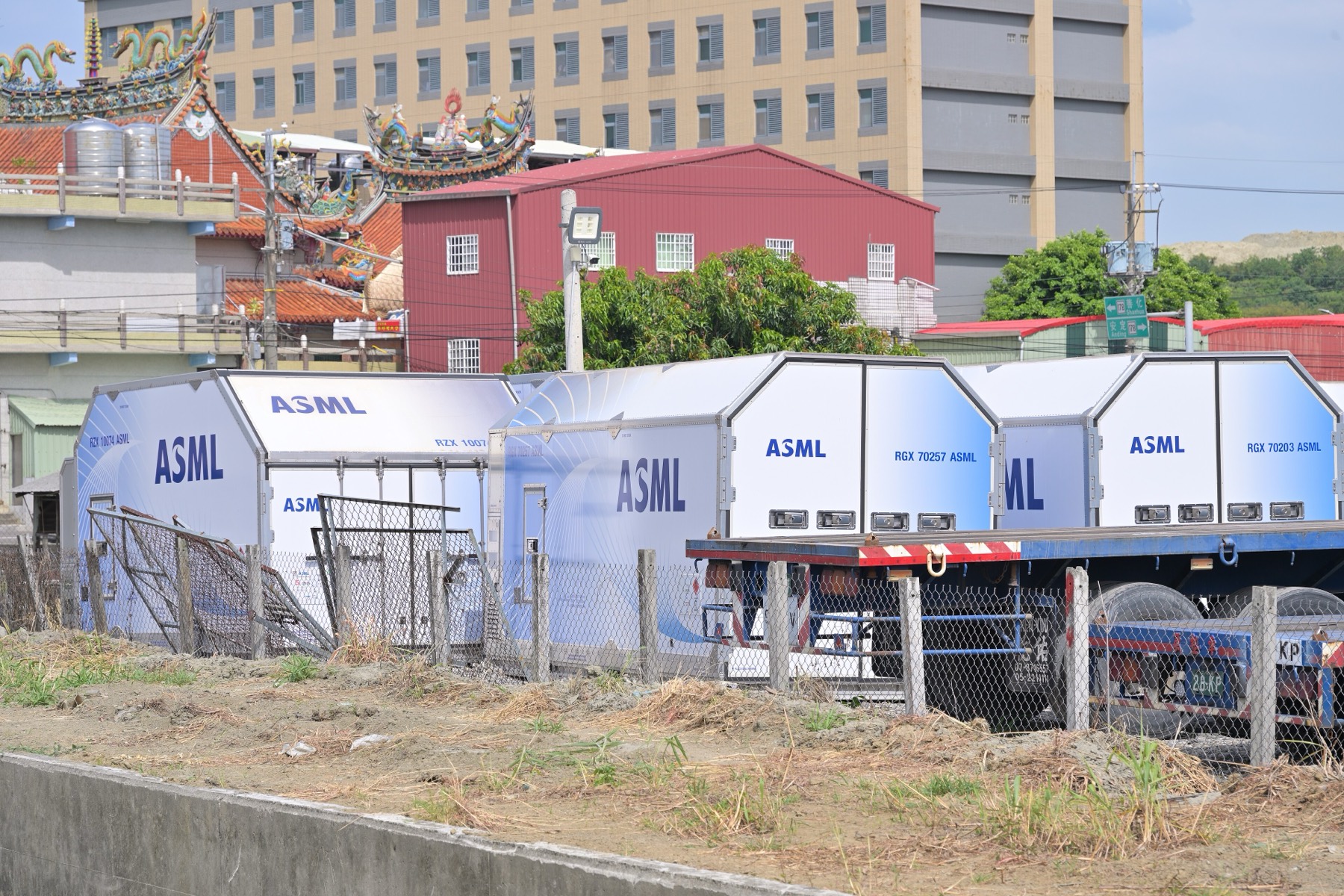
ASML filed record third-quarter net sales of €11.7 billion with the U.S. Securities and Exchange Commission on Oct. 14, 2026, and chief executive Christophe Fouquet told investors that the company's supply plan for 2027 and 2028 will miss what customers want to buy 1. ASML raised its 2026 sales forecast to between €44 billion and €45 billion, and customers have started asking for slots in 2029 and 20302.
ASML's Oct. 14 filing lifts compute 0.5 points
The moveThe data5 rows · sources
| Measure | Value |
|---|---|
| Reading before this day | 2.1 |
| This piece's move | +0.5 (Compute, confirmed) |
| Band for confirmed evidence | 0.8 to 1.5 |
| Reading after the day | 2.6 |
| Distance to 100 | 97.4 |
What did ASML report on Oct. 14?
ASML sells the lithography scanners that print the finest layers of leading chips, so its quarterly filing is a count of how many AI chips the industry can plan to make. Net sales reached €11,662 million in the third quarter, up 25 percent from €9,326 million in the second 17. Income reached €5.0 billion, and gross margin of 57.5 percent beat the company's own guidance.
Installed Base Management, the business that upgrades and services tools already running in customer fabs, contributed €3.3 billion 1. That line matters because a productivity upgrade adds wafer output inside an existing building. Fouquet said the company continues to "provide significant wafer capacity to our customers through our productivity upgrade portfolio".
Forward guidance follows the same direction. ASML expects fourth-quarter sales between €14.2 billion and €15.2 billion at a gross margin near 57 percent 1. The midpoint of €14.7 billion sits about 26 percent above the quarter just reported, by this desk's arithmetic.
Fouquet named the cause in the release. "Our customers continue to increase their short- and medium-term equipment demand forecasts with us, driven primarily by their views on the size and duration of AI-related investments," Fouquet said 1. Two claims sit in the phrase "size and duration." Customers expect AI spending to be large, and they expect it to last, which is the longer bet for a supplier whose tools take years to build.

ASML net sales rose 25 percent in Q3 and guidance points higher
ComparedWhy does a scanner count as compute?
Every AI accelerator Microsoft, Nvidia or Google designs reaches a wafer through a foundry, and the foundry's output per year follows its tool count. TSMC and Samsung both buy ASML's extreme ultraviolet (EUV) scanners for their finest layers. Fouquet told the earnings call that Samsung has announced High NA, the next EUV generation, for high-volume manufacturing starting in 2028, and that TSMC "basically confirmed that they will also introduce High NA around 2030" 3.
The tool count is public. ASML expects to ship about 65 EUV systems in 2026, a rise of more than 50 percent over last year 3. Its 2026 capacity stands at around 65 EUV systems and around 130 deep ultraviolet (DUV) immersion systems, the older scanners that print less demanding layers 7. On July 15 the company planned to add 30 percent to both for 2027, and by this desk's arithmetic that gives about 85 EUV and 169 DUV immersion systems.
A chip designer can announce gigawatts of racks in a blog post. Filling those racks takes wafers from a foundry, and each wafer passes through these scanners. For that reason the ledger counts a lithography supplier's capacity statement as compute evidence, one step upstream of the chip announcements the journal has scored in October.

How large is the 2027 and 2028 gap?
The Oct. 14 release moves the capacity story in one sentence. "We now expect that our supply as currently planned for both 2027 and 2028 will not fully meet the demand of our customers," Fouquet said, and he added that "we are investigating ways to increase capacity for 2028 beyond the 30% increase we previously communicated" 1.
Read the tense of that sentence. The July plan of 30 percent for 2027 and another 30 percent under investigation for 2028 was already public 7. What changed on Oct. 14 is the forecast it was measured against: customers raised their demand, and ASML now says 30 percent in each year leaves a shortfall.
The earnings call gave Fouquet room to say how large. "30% in 2027, 30% in 2028 will not allow us to meet our customer demand," he said, and then, "We have to do more" 3. He also said ASML sees "a lot of order intake for 2028". Compounding two 30 percent steps lifts EUV capacity from 65 systems to about 110 in 2028, a rise of 69 percent over 2026 by this desk's arithmetic. Fouquet's statement implies that customers want more than that.
Two details give the claim weight. The sentence sits in a filing with the SEC, where a conference remark would have been looser. And ASML adds in the same release that "some customers are expressing an interest in placing orders with us for 2029 and even 2030" 1.

Four dates behind ASML's capacity plan and its China exposure
TimelineWhy is the step smaller than the record suggests?
Jefferies, the investment bank, takes the opposing view in its note on the results. "While positive, an increase in both 2027 and 2028 was broadly expected," the firm wrote 2. It added: "We continue to expect the multiples of ASML and the sector to cyclically contract further, limiting share price upside". The first sentence says the market had priced a capacity raise. Its second sentence shows the bank reading ASML as a cyclical equipment stock, which values a record quarter lower than a growth stock would.
Shares carried the same ambivalence. Investing.com reported ASML up more than 2 percent in Amsterdam trading after the release, and the earnings-call transcript on the same site recorded the U.S. listing closing down 1.86 percent 23. The transcript observed that the earnings beat of about 21 percent contrasted with a revenue beat of about 0.4 percent.
China adds a second reason for restraint. Chief financial officer Roger Dassen said on the call: "The China part of the total business we expect to be around 20%" 3. China made up 14 percent of net system sales by shipment location in the second quarter, down from 19 percent in the first, according to TrendForce 5. A bill called the MATCH Act, introduced in Congress on April 2, would end ASML's servicing of machines already installed in China and give the Netherlands and Japan 150 days to match U.S. export rules 4.
Representative John Moolenaar, who chairs the House China committee, argues for the bill. "Beijing will inevitably use these machines to build its own industry and ultimately push ASML and others out of the market," he told the Dutch newspaper FD 4. IO+ reports that up to $9 billion of Chinese sales are at risk and that Chinese chipmakers bought more than $13 billion of DUV machines between 2024 and early 2026. Dassen opposes the bill and said he is "optimistic that common sense will prevail" 2. The Dutch government has lobbied in Washington to remove the bill, though NL Times judged its chances slim 6.
Each side needs something specific to be true. Fouquet is right if customers sign orders that fill the 2028 slots and ASML announces capacity above 30 percent. Jefferies is right if the increase was already in prices and a U.S. servicing ban cuts into the 20 percent China share.
The ledger takes both. A filing with record sales is confirmed evidence, which the method sizes from 0.8 to 1.5 points. The step stops at 0.5 for three reasons. First, the 30 percent plan predates the quarter. Second, the extra 2028 capacity is under investigation rather than ordered. Third, a lithography scanner is an input to compute that leaves energized megawatts unchanged. Before this piece the reading stood at 3.5 after the Oct. 13 evaluator piece. Compute rises from 2.0 to 2.5, and the day closes at 4.0.

Christophe Fouquet sees a capacity shortfall; Jefferies sees it priced
Both sidesBy the numbers
- €11.7 billion: ASML's record third-quarter net sales, 25 percent above the second quarter's €9.3 billion 17.
- 57.5 percent: third-quarter gross margin, above the company's guidance 1.
- €44 billion to €45 billion: the raised range for 2026 net sales 1.
- About 65 EUV systems: ASML's planned 2026 shipments, over 50 percent above last year 3.
- Thirty percent: the capacity increase planned for 2027, with another 30 percent for 2028 judged insufficient by Fouquet 17.
- Around 20 percent: the share of 2026 business Dassen expects from China 3.
- 150 days: the window the MATCH Act would give the Netherlands and Japan to match U.S. export rules 4.
What to watch
ASML's next quarterly report will show whether Fouquet's investigation produced a capacity number for 2028 above 30 percent, and whether the order book that supports it keeps growing. Foundry capital plans from TSMC and Samsung would confirm the demand ASML describes, and High NA shipment dates would show how the next generation of tools fits the plan. The MATCH Act decides the other side: passage with the servicing ban, or a place in the defense budget, would cut the China share and reverse part of this step.
Sources
- 1ASML reports €11.7 billion total net sales and €5.0 billion net income in Q3 2026, ASML (SEC Form 6-K), ASML, Oct. 14, 2026
- 2ASML shares climb on raised 2026 outlook, capacity expansion plans, Investing.com, Ayushman Ojha, Oct. 14, 2026
- 3Earnings call transcript: ASML tops Q3 2026 estimates but shares fall, Investing.com, Oct. 14, 2026
- 4ASML caught between US and China over MATCH Act, IO+, Team IO+, Oct. 12, 2026
- 5U.S. May Push Near-Total ASML China Ban on DUV Sales and Servicing Amid China Domestic Lithography Push, TrendForce News, TrendForce editor, Aug. 25, 2026
- 6U.S. preparing to force Netherlands to ban ASML from selling to China, NL Times, Aug. 20, 2026
- 7ASML reports €9.3 billion total net sales and €2.9 billion net income in Q2 2026, ASML (SEC Form 6-K), ASML, July 15, 2026