Aolani Cloud's $480 Million Chip Loan Stalls While Citigroup and JPMorgan Still Negotiate $6.6 Billion
Bankers at five lenders discussed leaving Aolani Cloud's $480 million loan after Commerce's Nov. 16 rule, while Citigroup and JPMorgan kept a $6.6 billion Bridge Data Centres loan in negotiation under a compliance clause.
By Ryan Elliott Dennis · 10 sources · 9 min read
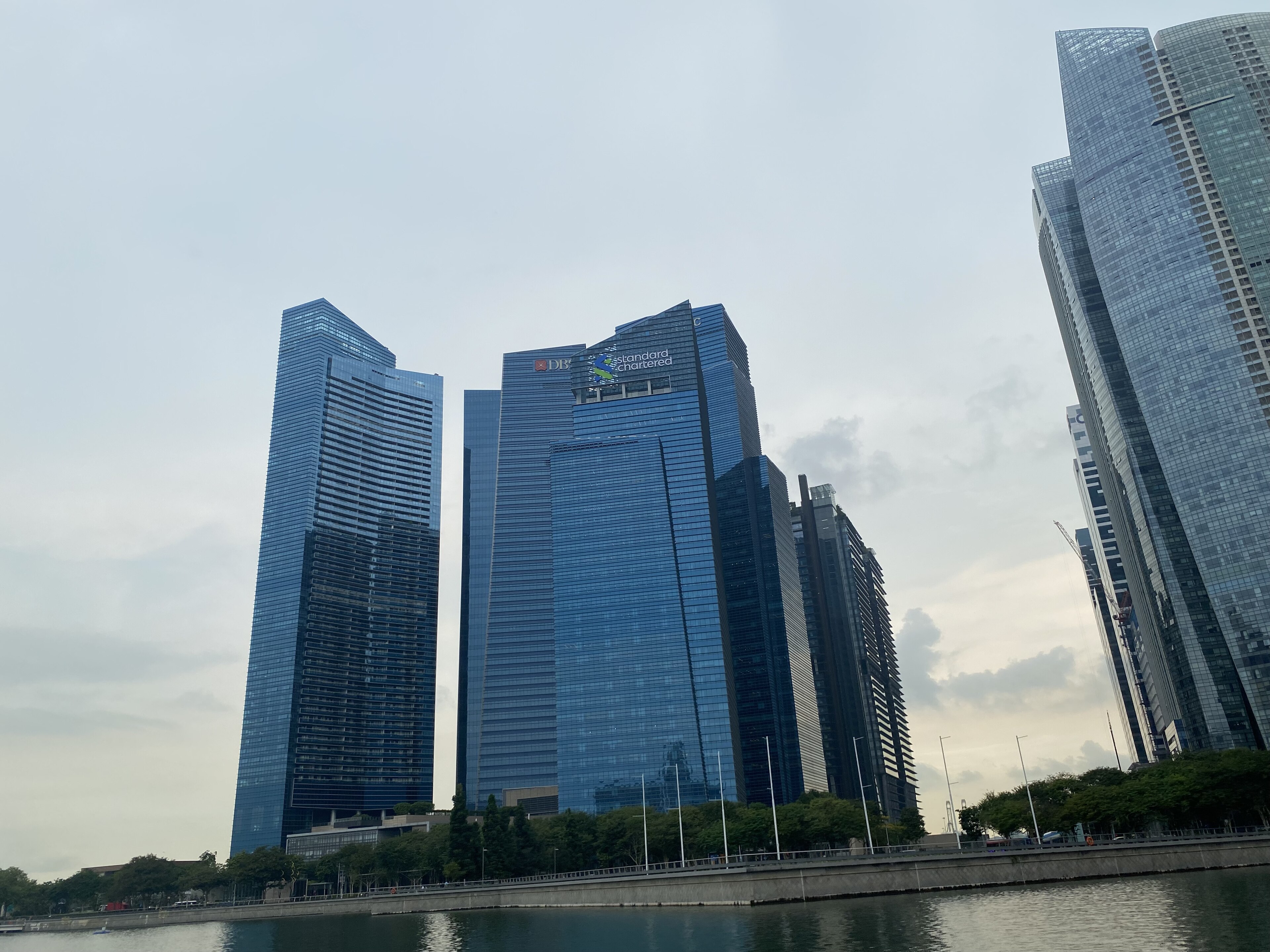
Aolani Cloud, a Singapore company that rents out Nvidia chips, lost its bankers' work on a $480 million loan after the U.S. Commerce Department released its chip rental rule on Nov. 16, 2026, Bloomberg reported 1. Bankers at five lenders weighing the deal held internal talks about pulling out or staying out. The money was meant to buy graphics processing units, or GPUs, for a data center in Malaysia whose computing power ByteDance, TikTok's Chinese owner, planned to use remotely.
Who pays for a data center when Washington can decide who rents it? Seoul Economic Daily carried the story on Nov. 18 under the headline "U.S. Banks Pull Back From Asian AI Data Center Lending" 7. The reporting beneath that headline names one frozen loan, arranged by a Singapore bank. Two American banks appear by name as well, and both are still negotiating a far larger loan. For AI data center financing in Asia, the gap between those two facts is the story.
Aolani Cloud's frozen $480 million loan moves capital down 0.2 points
The moveThe data5 rows · sources
| Measure | Value |
|---|---|
| Reading before this day | 8.8 |
| This piece's move | −0.2 (Capital, reported) |
| Band for reported evidence | 0.3 to 0.8 |
| Reading after the day (with 2 other pieces that day) | 8.6 |
| Distance to 100 | 91.4 |
What did bankers do to the Aolani Cloud loan?
Aolani had recently begun inviting banks to join the loan, Bloomberg's Kari Lindberg, Megawati Wijaya and Sheryl Tian Tong Lee reported 1. DBS Group Holdings, one of Singapore's three major banks, is the mandated lead arranger and book-runner, the bank that structures a loan and gathers other lenders into it 3. The bank declined to comment. Bloomberg left the five lenders unnamed.
Commerce's rule explains the timing. Chips bound for Malaysia now need a license, and so does any data center abroad that supplies more than 12,000,000 TPP of computing power to companies headquartered in China 9. TPP, total processing performance, is the export rules' measure of a chip's power. ByteDance's plan to use the GPUs from afar is the arrangement the rule was written to reach.
Lenders asked how the license process will work and which firms must apply, Bloomberg reported, and the questions came in "a barrage" 1. Progress waits until bankers finish reading the rule. Some bankers, in internal talk, have described the facility as "dead."
Aolani Cloud gave the other account. "We have spent significant time with our banking and financing partners to assess and anticipate regulatory risk ahead of this recent new ruling," a spokesperson for Aolani Cloud said. "We are pro-actively working with regulators and our financing partners to ensure the project delivery goes ahead in full compliance with the new ruling."
Read the two verbs side by side. A banker says "dead" and a borrower says "goes ahead," and both describe one loan on one day. Aolani's sentence also concedes the point lenders care about: the project now runs through regulators.
Epoch's loan slipped on Nov. 2; Aolani's froze after the Nov. 16 rule
TimelineThe data6 rows · sources
| Date | Event | Source |
|---|---|---|
| AIIB approves up to $125 million for Epoch's Malaysian campus | [8] | |
| Epoch Digital's presentation to prospective lenders is skipped | [2] | |
| Commerce releases its chip rental rule | [9] | |
| Lenders across Asia assess the rule; Aolani loan work stays frozen | [1] | |
| Citigroup analysts flag Singapore bank risks; DBS hits a four-month low | [3] | |
| Commerce's rule takes effect | [5] |
Which named banks left, and which stayed?
Three deals appear in the reporting, and each tells a different story.
First, the Aolani loan. Its arranger is a Singapore bank, and its five hesitant lenders go unnamed in print 1.
Second, Epoch Digital, a data center developer backed by the private equity firm Actis. Bloomberg reported on Nov. 16 that the wider sale of its $488 million loan to other banks had slipped, a "rare postponement" 2. That delay began two weeks before the rule: an online presentation set for Nov. 2 was skipped, and one person said Epoch's managers were unavailable. Four lead arrangers, HSBC, the Asian Infrastructure Investment Bank, Sumitomo Mitsui Banking Corp and Bank of China, have signed the loan and committed the funds. New dates are being arranged.
Epoch's tenant sits where the rule points. A project summary from the Asian Infrastructure Investment Bank says the first 60 megawatts are fully contracted to BytePlus, inside a campus designed for 120, and that the bank approved up to $125 million on April 23, 2026 8. Bloomberg names ByteDance as the user of the capacity 2. A Chinese-linked tenant, then, and committed lenders all the same.
Third, Bridge Data Centres, owned by Bain Capital. Citigroup and JPMorgan added terms to a potential loan that could grow to $6.6 billion, making the borrower responsible for following U.S. export controls and Commerce's Entity List, Bloomberg reported, as relayed by The Next Web 4. A breach could let the banks call a default. Those decisions came from the banks' New York head offices, before the Nvidia scandal broke, and the documents could still change. Bridge once sold capacity in Malaysia to Megaspeed, a firm under U.S. investigation that denies wrongdoing, and replaced it with Zenlayer, according to a memo sent to lenders in February.
About a dozen bankers at Asian and European lenders told Bloomberg their firms had kept their loan terms as they were 4. American banks, they said, face the greater risk if a deal goes wrong.
Set that beside Seoul Economic Daily's account, which says lenders "have agreed either to withdraw from or stay out of loans tied to Asian data centers" 7. Across these reports, every American bank that appears by name is a lender still negotiating.

Which named banks stand behind which Asian data center loan
Who connectsThe data7 rows · sources
| From | Link | To | Source |
|---|---|---|---|
| DBS | arranges $480M, work frozen | Aolani Cloud | [1] |
| ByteDance | planned remote GPU user | Aolani Cloud | [1] |
| HSBC | signed and committed | Epoch Digital | [2] |
| AIIB | approved up to $125M | Epoch Digital | [8] |
| ByteDance | named user of capacity | Epoch Digital | [2] |
| Citigroup | adds export-control clause | Bridge Data Centres | [4] |
| JPMorgan | adds export-control clause | Bridge Data Centres | [4] |
Why does one frozen loan move the capital reading?
The ledger's capital question asks whether closed financing is paying for the buildout, or only announced financing. A loan that stops in syndication is money that failed to close. Chips it would have bought stay unbought, and the megawatts behind them stay dark.
How many megawatts? Thailand offers one count. Supparat Sivapetchranat Singhara Na Ayutthaya, vice chairman of the Thai Data Center Association, told Reuters that about 300 megawatts of GPUs were expected in the country over the next 12 to 18 months 6. "Those 300 GPUs obviously were targeted towards Chinese end users," he said, and he put their cost at roughly $12 billion to $18 billion.
Citigroup's own analysts made the case that the damage reaches bank balance sheets. Yong Hong Tan and Ferry Wong wrote, in a note Bloomberg reported on Nov. 18, that their new assumptions for Singapore's banks are "predicated on significant uncertainty from new chip curbs to Southeast Asia, lower global AI accelerator forecast, with increased asset quality risks evident in recent HSBC data-center loans sold at steep discounts" 3. Shares followed. Oversea-Chinese Banking Corp fell as much as 2.4 percent that day, United Overseas Bank as much as 2.5 percent, and DBS touched a four-month low.
Singapore's prime minister named the same worry. "What we are more concerned about, of course, would be the chips that come into Singapore and are used by Singapore companies, by our data centres," Lawrence Wong told reporters in Manila on Nov. 17 10. He offered to help Washington check how chips in Singapore are used.


Thailand expected 300 megawatts of GPUs aimed at Chinese users
The numberThe data1 row · sources
| Measure | Value | Source |
|---|---|---|
| GPUs expected in Thailand within 12 to 18 months and aimed at Chinese users | 300 megawatts | [6] |
Why is the step 0.2, and smaller than the headline?
Start with the strongest voice for a narrow reading. "We expect the rules to create a two-tier market that favors trusted providers and U.S. hyperscalers rather than derail regional growth, especially given the increasing constraints on building data centers in the U.S.," said Gary Tan, a portfolio manager at Allspring Global Investments in Singapore 6. On his reading, capital moves between tenants more than it leaves.
CGS International, a research house, called the rule a speed bump for Southeast Asian data center spending 5. Among the Malaysian companies it covers, AI data centers make up less than 10 percent of about 1.3 gigawatts of installed capacity. "Malaysia's energy, water and undersea cable capacities remain the key draws for DC investments," CGS International wrote. It expects slower AI spending into 2027 "as investors await licensing clarity."
Ming San Soong, an analyst at MBSB Research, drew the line at the hardware. "The immediate impact should be on GPU deployment and capacity activation, with construction demand affected only if the delays weaken tenant commitments or postpone follow-on phases," Soong told Reuters 6. Even Supparat expects Thailand's supply to be "re-pivoted to U.S. customers."
Four facts hold the step at 0.2, below the reported band of 0.3 to 0.8. Capital carries a weight of 0.05 in the reading. Aolani's loan is paused while lenders wait for license answers, and existing operators have 90 days to obtain a license 9. Epoch's lead arrangers remain committed 2. Citigroup and JPMorgan chose a clause over an exit 4.
Consider the banker who said "dead." That word, the Citigroup note and the Thai megawatts are the strongest evidence for a larger step. Each describes an expectation. Every closed loan named in these reports still stands, and the ledger moves on what has happened.
The frozen loan is $480 million; the loan still in talks is $6.6 billion
ComparedWhat would each side need to be true?
Yong Hong Tan's reading holds if lenders mark down loans already made and new syndications fail across the region. Gary Tan's holds if licenses arrive, American tenants fill the halls, and stalled loans restart under clauses of the Citigroup and JPMorgan kind.
The verdict for now is narrow. One loan froze, worth $480 million, and its five lenders are unnamed. A borrower seeking bank money for chips in the five named countries should expect an export-control covenant in the documents and a lender who asks for the tenant's ownership records first. Count the pullback by signed loans. Headlines measure something else.
Citigroup's analysts see loan-quality risk; Allspring's Gary Tan sees two tiers
Both sidesThe data2 rows · sources
| Side | Who | Claim | Source |
|---|---|---|---|
| For | Yong Hong Tan | New chip curbs to Southeast Asia bring significant uncertainty and increased asset quality risks, evident in recent HSBC data-center loans sold at steep discounts. | [3] |
| Against | Gary Tan | The rules create a two-tier market that favors trusted providers and U.S. hyperscalers rather than derail regional growth. | [6] |
By the numbers
- $480 million: the Aolani Cloud loan on which bankers froze work, with DBS as mandated lead arranger and book-runner 1.
- Five lenders held internal talks about pulling out of that loan or staying out 1.
- $488 million: the Epoch Digital loan whose wider syndication slipped after a missed Nov. 2 presentation, with four lead arrangers committed 2.
- 60 megawatts: the first phase of Epoch's Malaysian campus, fully contracted to BytePlus, per the Asian Infrastructure Investment Bank 8.
- $6.6 billion: the potential size of the Bridge Data Centres loan carrying Citigroup and JPMorgan's export-control clause 4.
- About 300 megawatts of GPUs bound for Thailand were aimed at Chinese users, at $12 billion to $18 billion, by the Thai Data Center Association's count 6.
- Less than 10 percent: the AI share of about 1.3 gigawatts of installed capacity among CGS International's covered Malaysian companies 5.
- 2.5 percent: United Overseas Bank's largest share-price fall on Nov. 18, as DBS hit a four-month low 3.
What to watch
Commerce's first license decision for a Southeast Asian data center with a Chinese tenant would settle the most, because lenders told Bloomberg they are waiting on that process 1. A restarted Aolani syndication would argue for reversing this move. Signed Bridge documents at $6.6 billion with the clause intact would support the narrow reading 4. A second frozen loan, a named American bank leaving a syndicate, or new dates for Epoch's presentation slipping again would deepen the step 2.
Sources
- 1Banks pause US$480 mil chip loan tied to China's ByteDance, Bloomberg (via The Edge Malaysia), Kari Lindberg, Megawati Wijaya and Sheryl Tian Tong Lee, Nov. 18, 2026
- 2Malaysian data centre loan syndication delayed in rare deal pause, Bloomberg (via The Edge Malaysia), Aileen Chuang and Megawati Wijaya, Nov. 16, 2026
- 3Crowded Singapore bank stocks face rotation as AI risks mount, Bloomberg (via The Edge Malaysia), Srinidhi Ragavendran, Nov. 18, 2026
- 4Citi and JPMorgan reportedly add chip-curbs clause to Bain data centre loan, The Next Web, Cristian Dina, Nov. 18, 2026
- 5US AI chip curbs a speed bump, not a derailment, for Malaysia's data centre boom, The Edge Malaysia, Nov. 18, 2026
- 6'This is a meaningful escalation': Reaction to U.S. curbs on AI chips that threaten data centre boom, Reuters (via The Globe and Mail), Rozanna Latiff, Che Pan, Ankur Banerjee and Devjyot Ghoshal, Nov. 17, 2026
- 7U.S. Banks Pull Back From Asian AI Data Center Lending, Seoul Economic Daily, Park Si-jin, Nov. 18, 2026
- 8Project Summary Information: Project Mercury, Malaysia Green Data Center Financing (P000938), Asian Infrastructure Investment Bank, April 24, 2026
- 9Addressing Remote Access to Advanced Semiconductors (RIN 0694-AK50), interim final rule, U.S. Commerce Department, U.S. Department of Commerce, Nov. 16, 2026
- 10Singapore PM expects 'some impact' from US chip curbs, Bloomberg (via The Edge Malaysia), Philip J Heijmans, Nov. 18, 2026