Anthropic Signs a 20-Year Lease for 95 Megawatts at EverWind's Nova Scotia Campus
Anthropic leased the first 95 megawatts of EverWind Fuels' Point Tupper campus on Oct. 16, 2026, with 420 megawatts planned by 2028, while a conservation group and the opposition NDP press for impact studies.
By Ryan Elliott Dennis · 4 sources · 6 min read
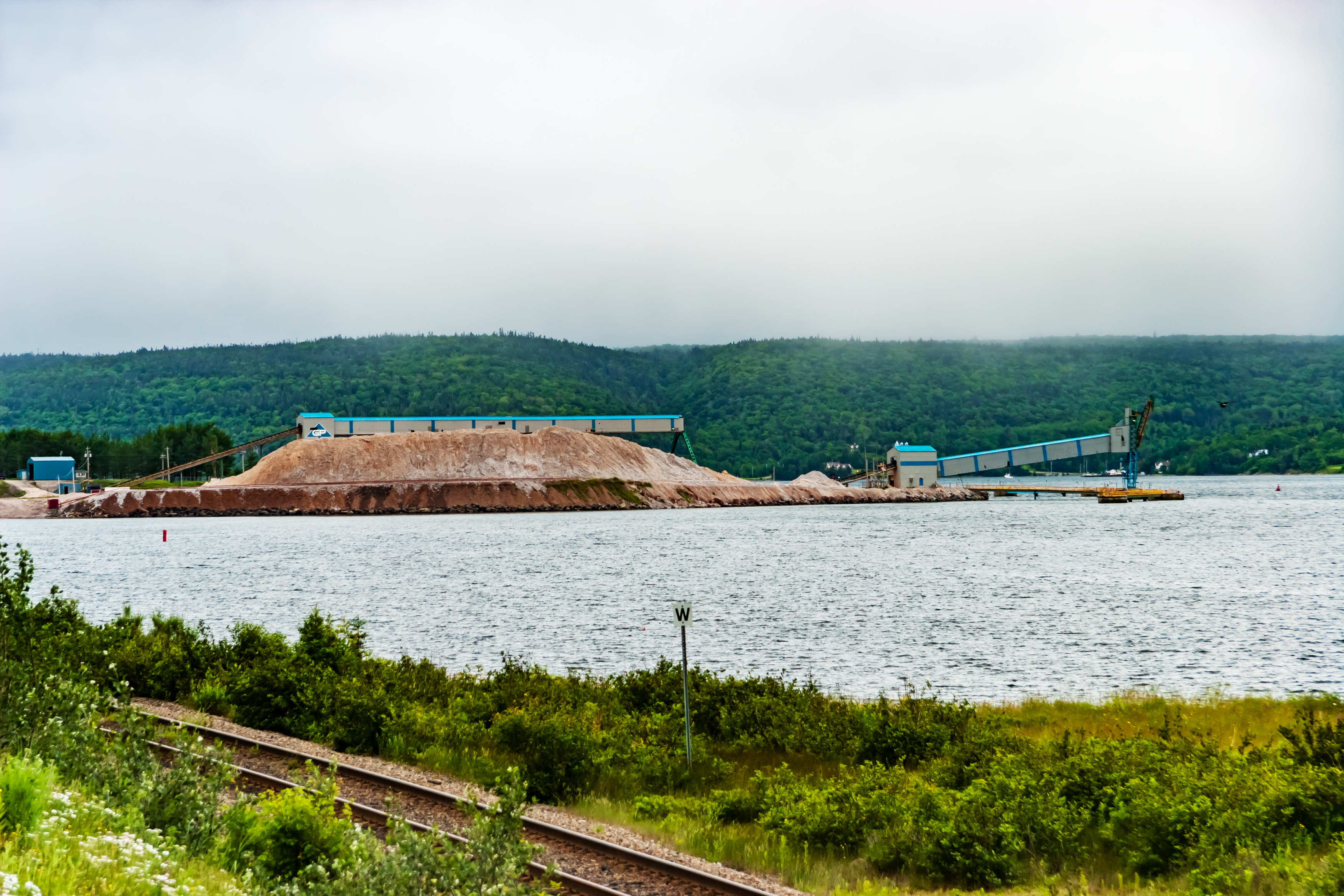
Anthropic signed a lease on Oct. 16, 2026, with EverWind Fuels for data center capacity at Point Tupper, Nova Scotia, the first data center agreement the Claude maker has made in Canada 4. The lease term runs at least 20 years. Phase one draws 95 megawatts and opens by the end of 2027, and a second phase of 325 megawatts follows in 2028, for 420 megawatts in all 12. EverWind puts the campus at more than C$10 billion, including $8 billion for the data center and $2 billion for wind farms3.
Anthropic's Oct. 16 lease lifts compute 0.3 points
The moveThe data5 rows · sources
| Measure | Value |
|---|---|
| Reading before this day | 3.0 |
| This piece's move | +0.3 (Compute, reported) |
| Band for reported evidence | 0.3 to 0.8 |
| Reading after the day (with 1 other piece that day) | 3.0 |
| Distance to 100 | 97.0 |
What did Anthropic and EverWind sign?
EverWind builds and owns the facility. Anthropic leases the first phase, and Anthropic's release says the site "will power Claude models and serve growing demand from Canadian and global customers" 1. The Canadian Press adds the floor area of 18,600 square metres and a usage fact: Canada is the sixth-largest country for Claude users 2.
Trent Vichie, EverWind's founder and chief executive, announced it at a news conference in Point Tupper. Vichie came to the project from private equity, where he was a senior managing director at Stonepeak Infrastructure Partners and earlier at Blackstone 2. "Speed matters, and capable partners matter and this is something that we can do," he told reporters. Read as strategy, the sentence puts speed ahead of price, and EverWind declined to disclose the lease's value.
Anthropic stayed away from the stage. CBC reported that Vichie had been "initially mum" about the tenant and that Anthropic issued its release later the same day 1. An Anthropic executive confirmed the lease to Reuters, and Jacob Glick, Anthropic's head of public policy for Canada, said Anthropic would protect ratepayers and water resources while making sure local communities benefit 4.


How much capacity does the lease put on the record?
Three numbers carry the move: 95, 325 and 420 megawatts. Nova Scotia's generating capacity is close to 3,000 megawatts, so the full campus equals about 14 percent of the province's fleet by this desk's arithmetic 1. For context, Anthropic spent $7.33 billion on computing and infrastructure last year, a threefold surge from 2024 4.
Physical work has started. Land clearing is underway, and officials told CBC they hope to pour foundations before winter 1. EverWind says it will pay for every grid connection and network upgrade, so the bills stay with EverWind, a cost EverWind keeps off existing Nova Scotia ratepayers 2. The campus plans about 200 megawatt-hours of battery storage and a design that can reduce or stop its draw on the provincial grid3.
EverWind also promised a community benefit program worth tens of millions of dollars and left the exact figure open. A consortium of Mi'kmaw communities fronted by Membertou First Nation is negotiating a nine percent equity stake in the project 1. Water figures come with a ceiling. The first phase uses an average of 100,000 litres a day and the finished campus 500,000. Both draw from Landrie Lake, which the provincial regulator has approved for 34 million litres a day, so the campus takes about one percent of the safe volume2.
Compare the project with other Canadian announcements in the same reporting. Meta announced a $13 billion, one-gigawatt site north of Edmonton in July, and BCE raised its Regina plan from 300 megawatts to 1.2 gigawatts in September 2. Point Tupper sits below both in size, and it carries a signed named tenant with a 20-year term, which is the feature the method rewards.
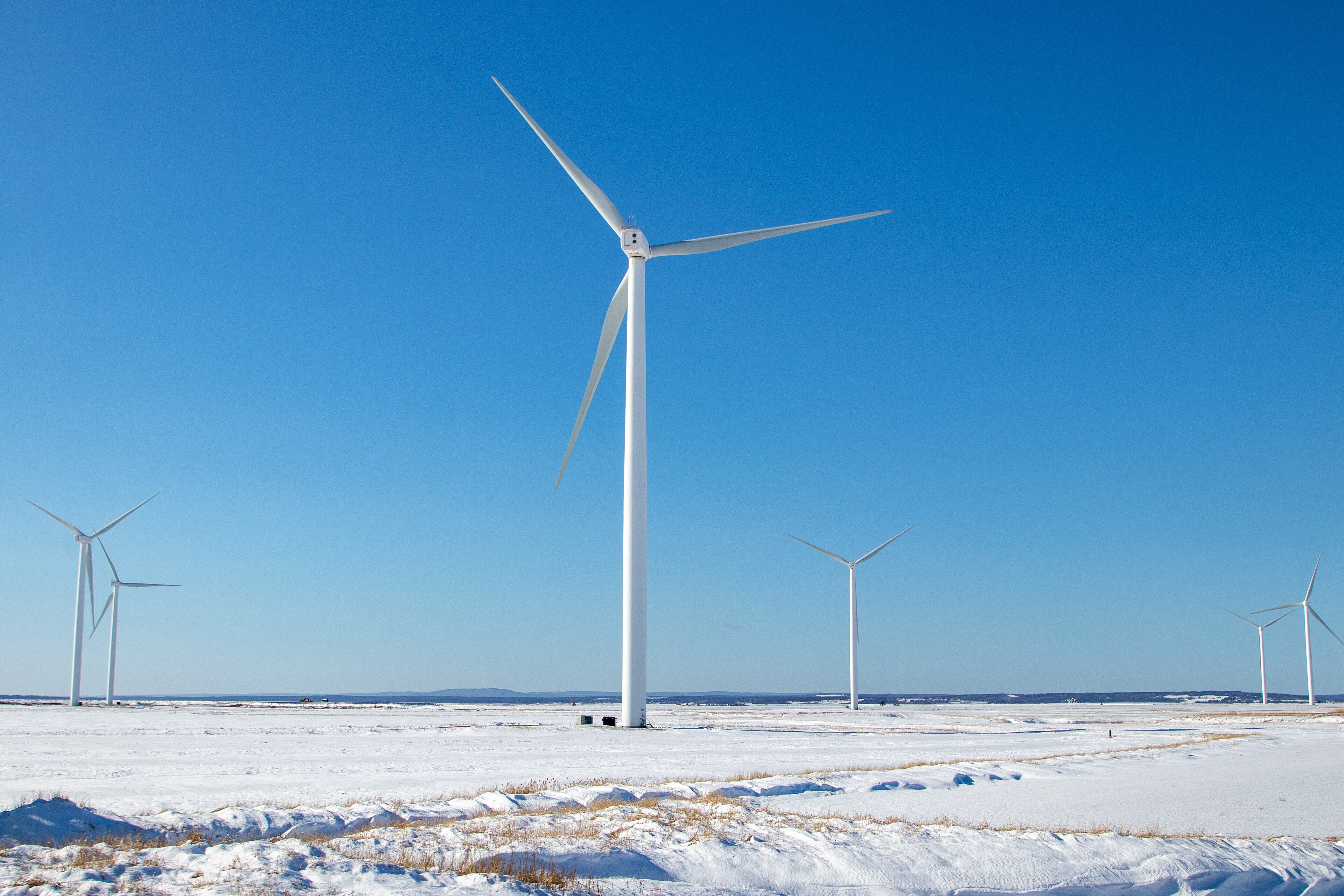

Point Tupper grows from 95 to 420 megawatts by 2028
ComparedWho argues for this campus, and who argues for caution?
Vichie speaks for the campus and for Canadian infrastructure. "This is investment that is in the ground here, supporting Nova Scotians, not only its energy economy but its knowledge economy as well," he said at the announcement 1. The phrase "in the ground" is checkable, and land clearing backs it.
Premier Tim Houston stood in the front row and made the policy case. "This represents the connection between the high-technology possibilities and potential of our province, and the energy generation potential that we have," Houston said 2. He also suggested that his government plans to rely on existing environmental and industrial approvals instead of new data center legislation.
Thomas Arnason McNeil, a grid decarbonization policy advocate at the Ecology Action Centre, made the strongest case for caution. "There will need to be analysis and work that is done in terms of quantifying ... the impact on ratepayers and understanding what the environmental impacts of the project will be," he said 1. The Centre said the project raises more questions than it answers, and McNeil's verb phrase "will need to be" places the studies in the future, after the foundations.
Claudia Chender, leader of the opposition NDP, pressed the same point in a statement that Friday. "The Houston government is supporting this project without any discussion, consultation, legislation or regulations," Chender said 2. Her sentence lists the missing steps, and Houston's remarks about relying on existing approvals leave that list as it stands.


Trent Vichie sees speed; Thomas Arnason McNeil wants impact studies
Both sidesWhy does the step stop at 0.3?
Reported evidence, meaning the companies' own announcements and Canadian press coverage, places this move in the band of 0.3 to 0.8 points. Four facts hold it at the floor of that band.
First, all 420 megawatts are still planned or in pre-construction. Phase one is due late next year and phase two in mid-2028 2. Second, EverWind plans to raise $8 billion of private capital, and the Canadian Press reports that EverWind will now pursue financing from banks and pension plans, using the signed lease as its anchor 1. Third, EverWind's wind farms will finish after the data center opens. Existing provincial generation supplies the power at first, backed by a grid operator study that EverWind officials cite. The Independent Energy System Operator told CBC it studies every project before allowing a connection, and it left unanswered whether capacity exists for this one.
Fourth, Canadian precedent shows how projects of this class stall. Manitoba's premier rejected a data center southeast of Winnipeg in June. The Alberta Utilities Commission denied a 1.4-gigawatt gas plant for a data center complex in Olds in August, and Oakville and Mississauga passed one-year moratoriums 2.
Vichie is right if the foundations go in before winter and the financing closes on a lease with a creditworthy tenant. McNeil is right if the impact studies he asks for arrive after construction starts. The next 12 months of filings decide between them.
The reading moves from 3.0 to 3.3 on this piece alone. Compute rises from 2.9 to 3.2.
What the announcement shows, and what stays open
The recordThe data7 rows · sources
| Column | Item | Source |
|---|---|---|
| On the record | Anthropic leases phase one for at least 20 years | [1] |
| On the record | Land clearing is underway at Point Tupper | [1] |
| On the record | 420 megawatts planned: 95 by end of 2027, 325 in 2028 | [1] [2] |
| Claimed or open | $8 billion of private capital is still being raised | [1] [2] |
| Claimed or open | Lease value is undisclosed | [2] |
| Claimed or open | Grid operator left phase-one capacity unanswered to CBC | [1] |
| Claimed or open | Wind farms finish after the data center opens | [2] |
By the numbers
- 95 megawatts: Point Tupper's first phase, due by the end of 2027 under a lease of at least 20 years 12.
- Phase two adds 325 megawatts in 2028, for a campus total of 420 megawatts 1.
- C$10 billion: EverWind's stated investment, split between $8 billion for the data center and $2 billion for wind 13.
- Anthropic spent $7.33 billion on computing and infrastructure last year, three times its 2024 figure 4.
- At 100,000 litres a day in phase one, the campus draws a small fraction of Landrie Lake's approved 34 million litres a day 12.
- Jobs: 2,000 construction positions and 215 permanent ones, paid $135,000 to $185,000 a year for the permanent roles 2.
- About 200 megawatt-hours of battery storage sits in the plan for the Point Tupper site 2.
What to watch
Foundation pours before winter and a financing close on the $8 billion would turn the lease from a plan into construction. A filing from the Independent Energy System Operator on grid capacity for phase one would answer the question it left open with CBC. Anthropic could settle the compute question by publishing the lease value or naming the capacity it will run in phase one. Either fact lets the ledger test the 95 megawatts against compute delivered.
Sources
- 1Nova Scotia to host massive data centre to power Anthropic's AI assistant Claude, CBC News, Taryn Grant, Oct. 16, 2026
- 2EverWind: $10B AI data centre proposal in Nova Scotia, CP24 (The Canadian Press), The Canadian Press, Oct. 16, 2026
- 3EverWind announces $10B data centre, wind investment in Nova Scotia, SustainableBiz Canada, Tyler Choi, Oct. 16, 2026
- 4Anthropic signs lease for first Canadian data center, Reuters (via The Star, Malaysia), Pragyan Kalita, Oct. 16, 2026